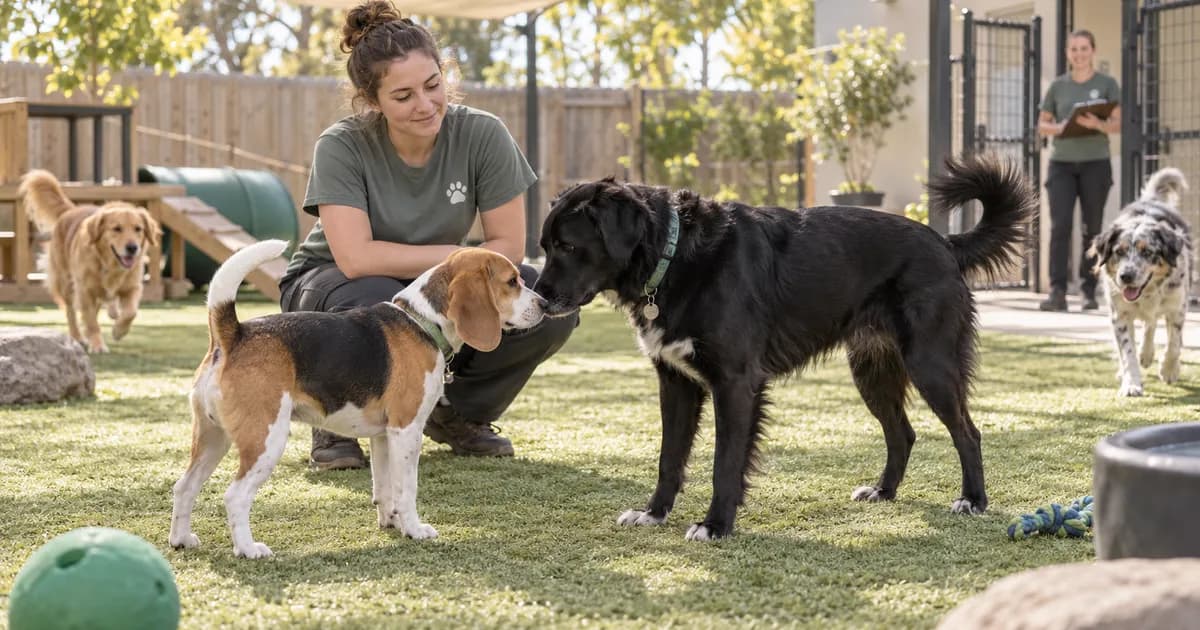
Daycares run a surprisingly formal admissions process, and most rejections happen before the first play session, on paper. Here's how to walk in ready.
For current background, consult AAHA canine vaccination recommendations. Facility policies and local requirements can differ; confirm the rules that apply to your pet.
The application packet: what you'll be asked for
Every daycare's packet is a little different, but the core asks are consistent:
Vaccination records (the non-negotiables)
- Rabies, subject to local law and facility policy; ask for the certificate with its validity dates.
- DHPP (distemper/parvo combination), current on the schedule your vet recommends.
- Bordetella (kennel cough), commonly requested where dogs play in groups. See the cadence section below; daycare rules here are stricter than most people expect.
- Canine influenza (H3N2/H3N8), required by a growing number of facilities, especially in metro areas and anywhere there's been a local outbreak.
- Leptospirosis, not universal, but increasingly common, particularly where dogs have outdoor or rural exposure.
Bring the actual certificates or a printed vaccine history from your vet, not just a verbal assurance. Facilities need dates (specifically expiration dates) because they enter them into their system and flag your dog when something is about to lapse.
Vet and emergency information
- Your regular vet's name, clinic, and phone number.
- An emergency contact who can actually pick your dog up, not just you, since the emergency might be that you're unreachable.
- Permission (and often a card on file) for the daycare to seek emergency vet care if needed.
Behavior and health history
- How your dog does with other dogs, strangers, and new environments.
- Any resource guarding, reactivity, bite history, or escape-artist tendencies. Be honest here: facilities ask because a bad fit is a safety problem, and a failed evaluation later is worse than a candid conversation now.
- Medications your dog takes, allergies, mobility limits, and anything staff should watch for during the day.
The logistics, feeding instructions if your dog will be there over a meal, plus a signed liability waiver and your agreement to the facility's policies (illness, late pickup, damage, and yes, expulsion).
The evaluation day: what they're actually testing
Before enrollment, many daycare runs a temperament evaluation, sometimes a few hours, sometimes a full day, often free or credited toward your first package. Your dog is introduced gradually to a small group of known, stable dogs while staff watch for:
- Sociability: Does your dog approach appropriately, read other dogs' signals, and back off when told (in dog language) to back off?
- Play style: Rough-and-tumble is fine; relentless, mounting-obsessed, or can't-take-a-hint is not.
- Arousal control: Can your dog settle, or does excitement escalate into chaos?
- Handling tolerance: Staff need to leash, redirect, and occasionally separate your dog safely.
- Resource behavior: Guarding toys, water bowls, or favorite humans from other dogs is a common fail.
Why dogs fail: The common reasons are leash reactivity that carries into the group, persistent humping or herding other dogs can't correct, guarding, panic-level anxiety (a welfare issue, not a training failure), and any aggression toward staff or dogs. A "fail" isn't always permanent, some facilities suggest training and a re-evaluation. Some dogs are simply better suited to a boarding setup with more downtime or small-group play, and a good facility will tell you that honestly.
Spay/neuter rules and puppy timelines
Some daycares require spaying or neutering by a specified age, including policies around 6–7 months, while others offer individual play or different arrangements. Ask for the actual cutoff and discuss surgery timing with your veterinarian. A daycare admission rule is not a medical recommendation for when your dog should have surgery.
Puppies can often start younger than people expect, many daycares accept pups once their vaccine series is far enough along that a vet considers group exposure reasonable, sometimes as young as 12–16 weeks with age-appropriate rounds of DHPP and Bordetella on board. This is genuinely facility-dependent (and vet-dependent), so ask before you assume you have to wait until six months.
How daycare vaccine rules differ from boarding rules
If your dog already boards somewhere, don't assume the same paperwork clears daycare. The key difference is Bordetella cadence: boarding facilities commonly require it every 6–12 months, while daycares (where dogs mix in groups every single day) may require documentation within 6 months; verify the actual policy. Ask separately about canine influenza and how the daycare tracks due dates. If you're gathering paperwork anyway, our guide to preparing your pet's records for boarding covers the certificate formats front desks ask for, and most of it applies to daycare packets too.
One more timing trap that catches people at boarding and daycare alike: many facilities won't count a vaccine given yesterday as protection today. If your dog's Bordetella or rabies is about to expire, renew it at least a week or two before the evaluation or first stay, not the day before.
Waitlists and re-evaluations
Popular daycares often run waitlists, especially for full-time spots. Getting on a list early (even before you need regular care) is a legitimate strategy.
Also know: many facilities require a re-evaluation after a long absence, commonly 3–6 months away, because dogs change, especially adolescents. If your dog "graduated" two years ago and hasn't been back, expect to redo the evaluation day and resubmit current vaccine records before the first new visit.
What gets dogs turned away or suspended
These issues can interrupt enrollment or attendance; this is not a ranking:
- Lapsed vaccine records. A missing or expired record can interrupt attendance. Bordetella's 6-month clock is the usual culprit, it expires twice as often as everything else and owners lose track.
- A failed evaluation. Behavior that isn't safe in a group, as above.
- Age and policy cutoffs. Not spayed/neutered past the facility's age limit, or a puppy whose vaccine series isn't far enough along yet.
- Symptoms at check-in. Coughing, lethargy, diarrhea, or a new limp can get your dog sent home the same morning, daycares are (rightly) paranoid about kennel cough and GI bugs moving through a group.
- Undisclosed history. A bite or aggression incident that surfaces later, after you checked "no" on the form, is grounds for permanent expulsion at most facilities.
- Paperwork mismatch. Records under a different dog's name, a certificate with no expiration date, or records from a mobile vaccine clinic that the facility can't verify, all can stall enrollment until you sort it out with your vet.
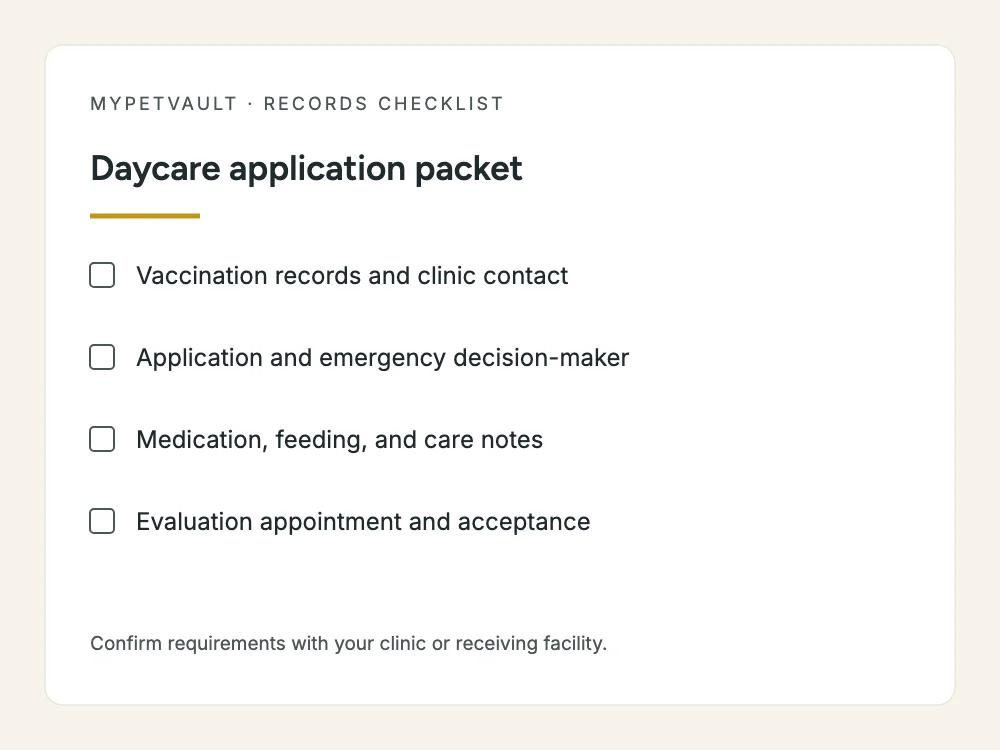
The daycare application checklist
- Application filled in honestly (health, medications, and behavior notes included)
- Rabies certificate and vaccine summary obtained from your vet
- Bordetella confirmed inside the facility's window (ask: 6 months?)
- Canine influenza, required? Series completed, if so
- Records sent to the facility and confirmed received before evaluation day
- Spay/neuter rule checked against your dog's age
- Evaluation day booked; cost and length confirmed
- Vet info, emergency contact, and authorized pickups listed
- Waitlist joined early if your first-choice facility has one
- Every expiration date written down where you'll see it, Bordetella first
The renewal habit: the part everyone skips
Enrollment is the start of a renewals treadmill: rabies every 1–3 years, DHPP on your vet's schedule, influenza annually, and Bordetella (at most daycares) every 6 months. Facility reminders often arrive the week the vaccine expires, leaving you scrambling for a vet appointment before your dog can go back.
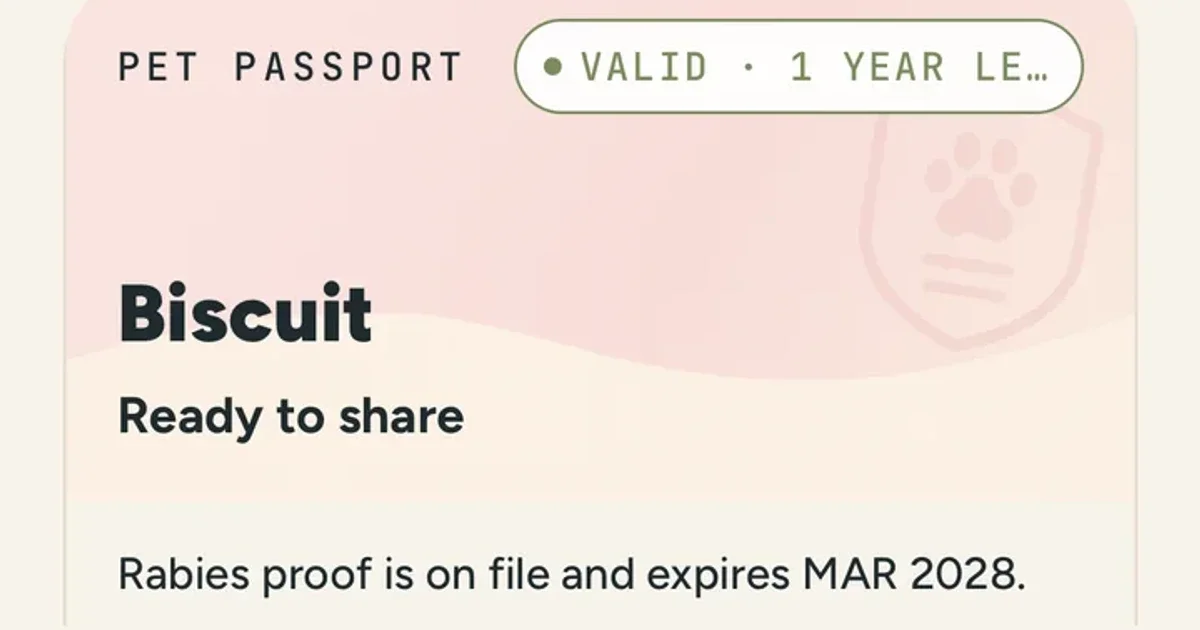
The fix is boring and effective: keep the certificates together, note the expiration dates where you’ll see them, and book the renewal visit before the earliest deadline. MyPetVault is a pet record app for that job: upload the rabies certificate to make your dog’s Pet Passport ready to share, and email a records summary when daycare asks. Your first pet is free. Get the app and have it done before evaluation day. Then you can spend the morning worrying about whether your dog makes friends, instead of whether you brought the right attachment.
Common questions
How old does a dog have to be for daycare?
Many daycares accept puppies once their vaccine series is far enough along (sometimes 12–16 weeks) but policies vary widely. Separately, some facilities set a spay/neuter cutoff around 6–7 months for group play.
Is Bordetella really required every 6 months?
For daycare, often yes. Boarding facilities commonly accept 6–12 months, but daycares where dogs mix daily frequently require a 6-month cadence. It varies by facility, so confirm, and note the expiration date, because lapsed Bordetella is the top reason dogs get suspended.
What happens if my dog fails the temperament evaluation?
It usually means the dog isn't a fit for that group setting right now, not that anything is "wrong" with them. Ask what specifically staff saw; some facilities recommend training and offer a re-evaluation, and some dogs do better with small-group play or boarding with more downtime.
Can my dog go to daycare if their vaccines expired last week?
Almost certainly not until they're renewed. Most facilities' systems flag expired records at check-in, and there's no grace period for rabies or Bordetella. Renew first, ideally a week or two before the visit, since some facilities don't count brand-new vaccinations as immediately effective.
Do I need to reapply if my dog hasn't been to daycare in a year?
Quite possibly. Many facilities require a re-evaluation after an absence of several months, and you'll need current vaccine records either way. Call before booking, it's a five-minute check that saves a turned-away morning.
Sources & further reading
Keep reading
 How to Prepare Your Dog's Records for Boarding: The 3-Week Prep Plan8 min read
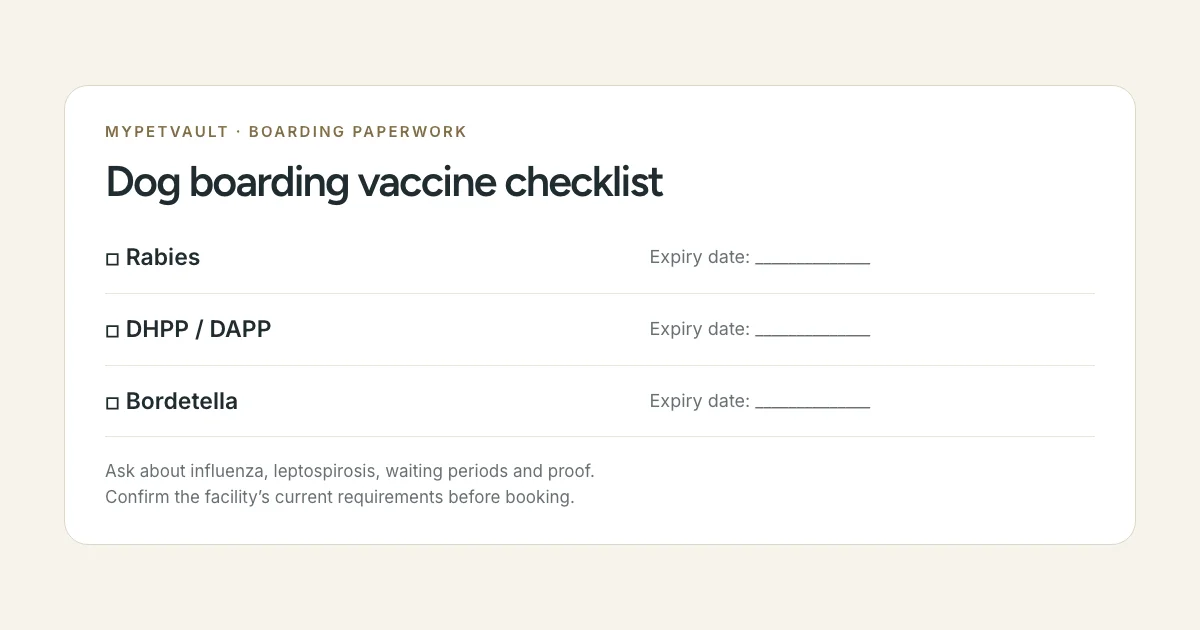 What Vaccines Does a Dog Need for Boarding? The Complete Requirements Checklist8 min read