Three weeks out: get the real list, then take inventory
Start with the boarding facility's own requirements, in writing. Ask which documents it wants, when they are due, how it wants them sent, and whether vaccinations must stay current through your pickup date. If the website and the front desk give different answers, ask for clarification before you book any vet appointments. A friend's experience at another facility is not a substitute, and requirements vary by facility, city, and state.
Then take inventory of what you already have. Look for evidence, not reminders: a reminder email tells you an appointment exists, but it is not the document a front desk files. What you are hunting for is the rabies certificate and a clinic-issued vaccine history with dates given and due. Note anything that raises a flag while you look:
- A record under a previous owner's name, or an old name for your dog
- A vaccine due date that falls during the stay
- A document you know exists but cannot find
Week-three checklist
- Facility's written requirements and submission deadline in hand
- Rabies certificate and vaccine history located
- Every date checked against the full stay, including pickup day
- Gaps listed to guide the next two weeks
Two weeks out: fix the gaps while fixes are still cheap
This is the vet-appointment window, and it exists because of timing rules. Many facilities require a gap between a booster and check-in. Bordetella is a common timing question. For example, PetSmart PetsHotel requires vaccinations at least 24 hours before arrival and prefers them 10 to 14 days before check-in. Other facilities set different windows, so a booster given the week of your trip may not meet your facility's rule. Anything the inventory flagged, such as a booster coming due or a vaccine expiring mid-stay, gets handled now, not later. Your facility's exact numbers come from its checklist; your vet advises on your dog's care.
This is also when you request any document you could not find (how, below). Do not leave requests to the final week: clinics need a few business days, and a request sent early can be re-sent if it goes astray.
Finally, fix errors at the source. If a certificate carries the wrong name or a wrong date, the issuing clinic corrects it. Never edit a certificate yourself. A document that looks altered can be rejected outright, and explaining it at check-in is a bad start to a trip.
Week-two checklist
- Vet visit booked for anything due or expiring during the stay
- Missing documents requested from the clinic
- Name or date errors sent back to the issuing clinic for correction
One week out: assemble the packet and send it
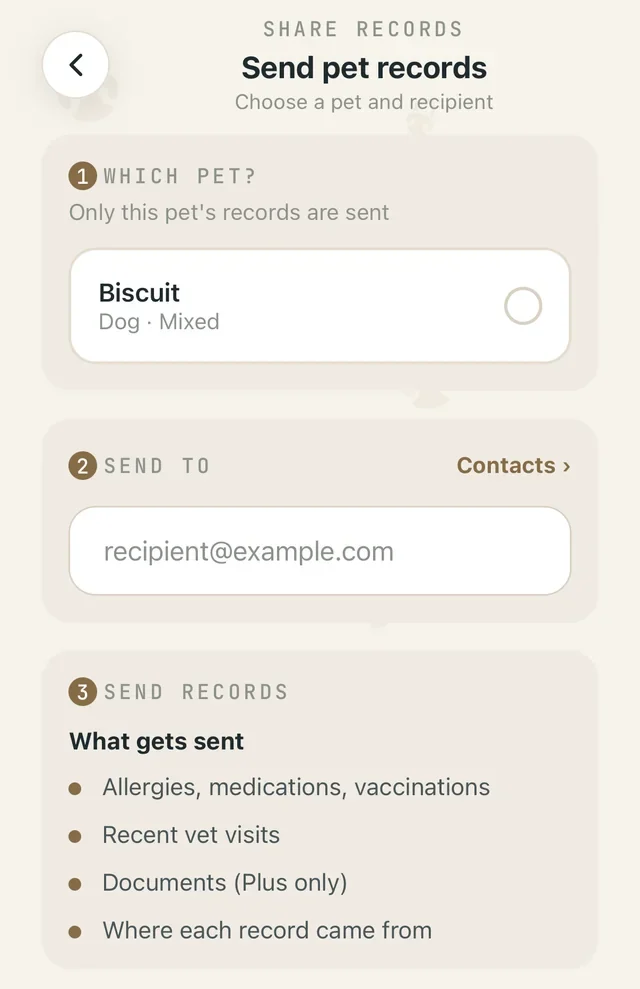
Assemble exactly what the facility asked for, using the full records checklist below, as one set, clearly labeled with your dog's name and the stay dates. For several dogs, make a separate packet for each, even on one reservation.
Send the packet by the facility's deadline, in the format it requested, with a short note naming what is attached. Then ask the question that separates a smooth check-in from a scramble: please confirm the packet is complete for the full stay, and tell me if anything is outstanding. Delivery is not review. An upload receipt or a sent email only proves the files moved; a staff member still has to open them and check them against your dates.
If staff flag a problem, ask for the exact reason, such as an unreadable file, the wrong pet, or a date that does not satisfy a rule, and take that specific reason back to your clinic. It resolves in one round trip instead of three. Save the facility's confirmation with your own copy of the packet.
Week-one checklist
- Packet assembled, one per dog, labeled with name and stay dates
- Packet sent in the facility's format, with a note listing the contents
- Written confirmation requested: reviewed, not just received
The final days: confirm, preflight, check in
Two or three days out, if you have not received that confirmation, call. Do not assume silence means approval, especially around holidays, when clinics and kennels are both at their busiest.
Then do a five-minute preflight on the phone you will actually carry:
- Open the packet and confirm every file opens and is legible
- Check that any printed copy the facility asked for matches what it accepted
- Pack medication in its original labeled packaging if that is the facility's rule, with the written instructions
- Tell your backup contact they are listed, and make sure they know the dates
On the day, bring the packet, the medication, and the facility's confirmation message. If anything is still outstanding, talk to the staff before you leave home rather than hoping for a waiver at the desk. Do not count on a waiver at check-in; it is better to know your options early.
The records checklist: exactly what goes in the packet
Not every facility asks for every item; its written list decides. This is the full set facilities ask for most often:
- Rabies certificate: the certificate itself, showing the date given and the expiration date
- Vaccine history from the clinic: each vaccine, the date given, and the date due
- Any test reports or extra forms your facility specifically requested
- The facility's intake forms, completed
- Medication instructions, current and in writing from your vet, if your dog takes anything
- Feeding and routine notes the staff have agreed to follow
- Your primary vet's name and phone number
- An emergency contact, plus a backup who knows they are listed
- How to reach you during the trip
- Your dog's microchip number, in case it is needed
Keep routine preferences separate from medical instructions. Feeding notes can be plain household language; medication instructions should match your vet's current written directions word for word.
How to get records you are missing
Start with the clinic that administered the vaccines. Call or email and ask for two things by name: the rabies certificate, and a complete vaccine history showing dates given and due. Say it is for boarding and give your stay dates, so staff can flag anything that expires during the stay while they have the chart open.
If your dog's history is split because you moved, changed vets, or had an emergency visit somewhere else, each clinic holds its own pieces, and you request from each one. If a clinic has closed, look for a successor practice or records custodian; your state veterinary board may be able to explain how to locate the records if you hit a dead end.
For the full walkthrough, including a copy-paste email that asks for everything in one message, see our guide to requesting your pet's records from your vet.
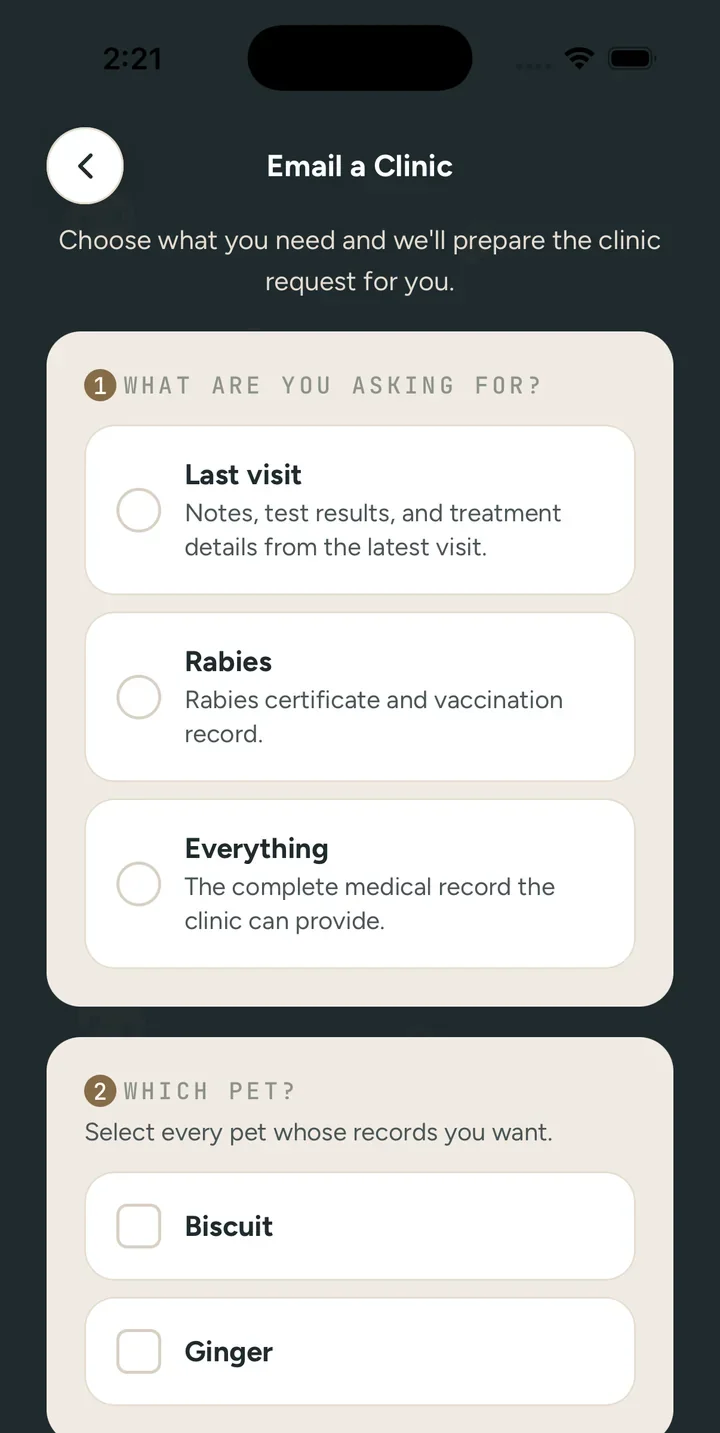
That chasing is the part a pet record app is built to remove. In MyPetVault, Email-a-Clinic writes the request for you; your clinic replies with the files or sends them through a secure upload link, and anything they send waits for your approval before it is saved to your dog's records. However you request, ask early: the week of travel is the worst time to learn a clinic needs three business days.
After the stay: keep the packet alive
Save the packet with the stay dates on it. Before the next booking, ask for a fresh checklist, because facility policies change and so do your dog's records, but starting from the last packet turns a three-week job into a ten-minute check. Our guide to keeping pet records covers how to maintain that file without losing the older history.
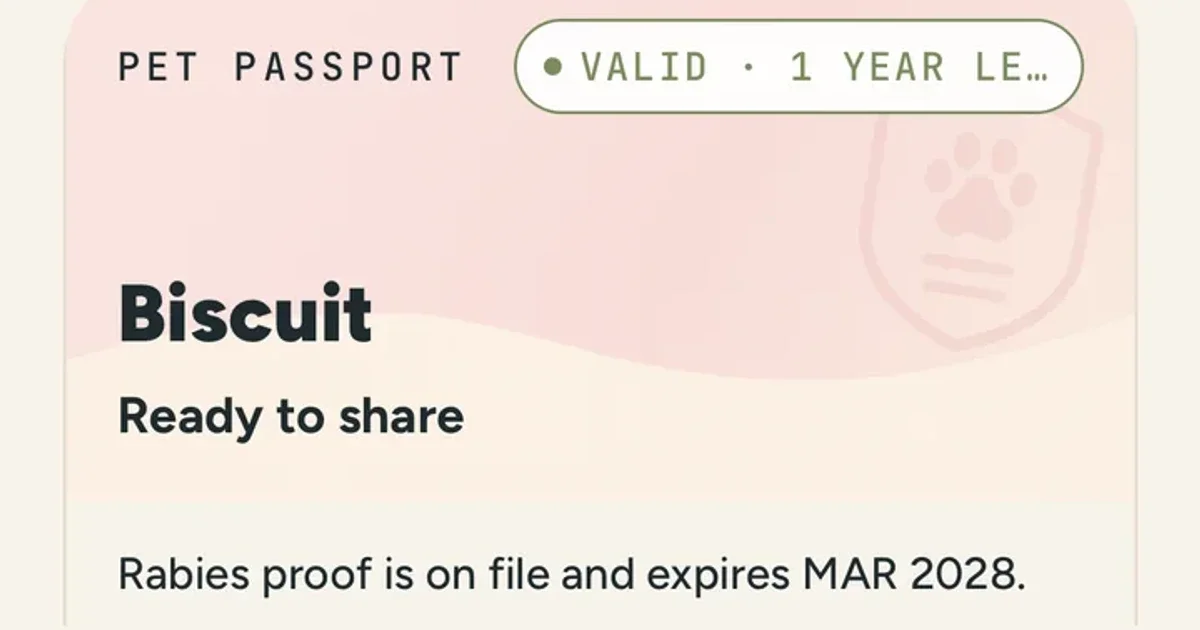
Keeping the packet together is the whole trick. MyPetVault keeps each dog's certificates, vaccine history, and care notes in one Pet Passport. Upload the rabies certificate and the Passport is ready to share the next time a facility asks. Your first pet is free: Start with your first pet free.
Written for pet owners in the US & Canada. Rules and fees vary by location, so confirm the details with your clinic.
Common questions
How far in advance should I prepare my dog's records for boarding?
Start about three weeks before the stay. That leaves room to request missing documents, renew anything expiring during the stay, and respect the waiting period many facilities set between a booster and check-in, including any Bordetella waiting period the facility sets. If your dog needs a first-time vaccine series, start earlier and ask your vet about timing.
What records do I actually send the boarding facility?
Whatever its written checklist asks for, most commonly the rabies certificate, a vaccine history with dates given and due, and the facility's own intake forms, plus written medication instructions if your dog takes any. Send them by the facility's deadline and ask staff to confirm the packet is complete for the full stay.
What if a vaccine expires in the middle of the stay?
Ask the facility how it handles a vaccine that expires during the stay. It may require the vaccine to remain current through pickup, so a renewal could be needed before drop-off. If a renewal is needed, ask your vet about timing and leave room for the facility's post-vaccination waiting window. Policies vary.
My dog's records are spread across two vets. What do I do?
Request a copy from each clinic: the rabies certificate from whoever administered it, and a vaccine history from each. You do not need one clinic to collect the other's records; you assemble the packet yourself, or keep the pieces together in one place once you have them.
Does a "Ready to share" Pet Passport guarantee my dog can board?
No. In MyPetVault, uploading your rabies certificate to the Pet Passport makes it ready to share, so the proof is in your hand in seconds. The facility still reviews the evidence and makes its own admission decision, and it may require more than rabies proof.
Tommy Cao, founder of MyPetVault
Sources & further reading
Doing this in the app? Saving records help guide
Keep reading
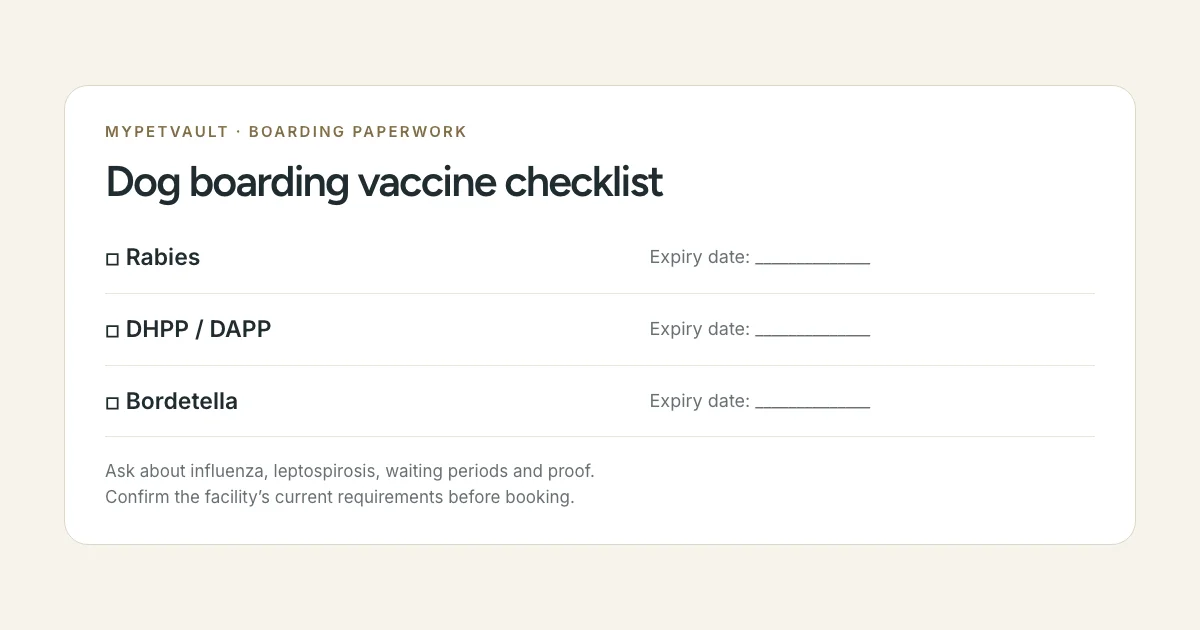 What Vaccines Does a Dog Need for Boarding? The Complete Requirements Checklist8 min read
 The Dog Daycare Application Checklist: Records, Evaluations, and What Gets Dogs Turned Away8 min read