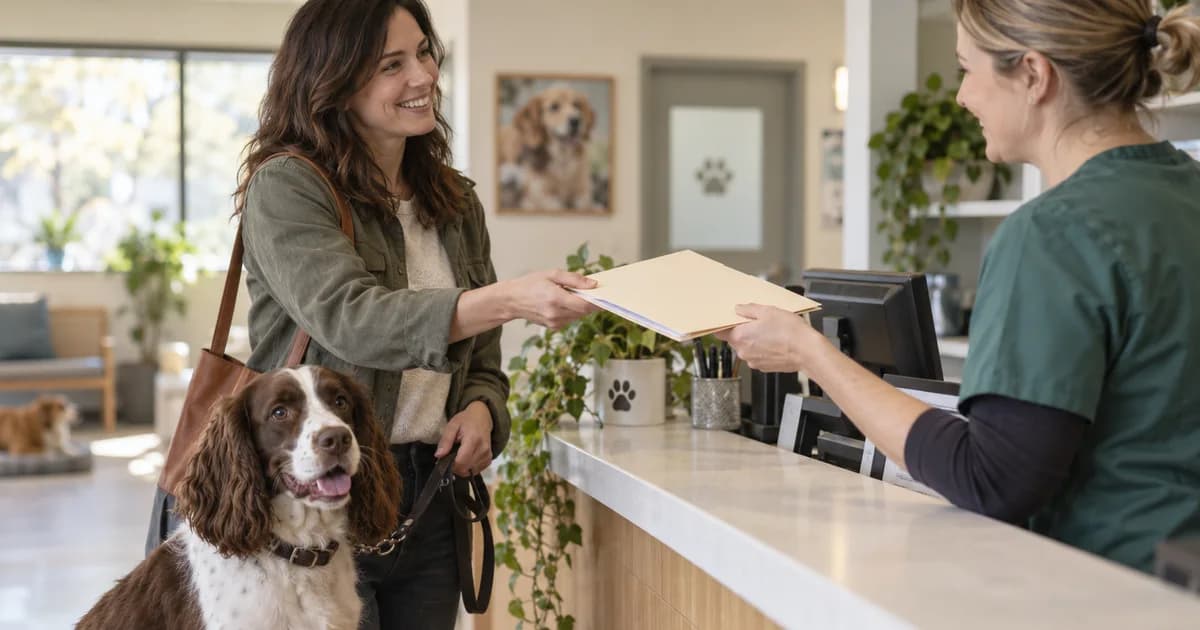
You've picked a new vet. Now comes the part nobody explains: getting your pet's history to actually follow you there.
Records-access rules depend on where the clinic practices. As one local example, the California Veterinary Medical Board explains owner requests and closed-practice records. For a clinic elsewhere, check its veterinary board or provincial regulator rather than applying California rules.
Who sends what to whom
There are three routes, and they're not equal:
- Clinic-to-clinic (the standard route). Your old clinic sends records straight to the new one by email, fax, or their practice software. Fast and normal, but you're out of the loop, so you can't see what was sent or whether it landed.
- Owner copy (the route I recommend adding). You ask for a copy for yourself as well. This takes two extra minutes and gives you a permanent master file of your pet's history that no future move, closure, or system change can strand. Clinics close and merge; your copy doesn't.
- Both. Honestly the best answer. Direct transfer for the new clinic's workflow, plus your own copy for safekeeping.
If a clinic asks you to sign a records-release form, that's routine, sign it and keep a copy. Some clinics will only release records to the person named on the account, so if your partner or a family member is the listed owner, they may need to make the request.
Request the records for your new clinic
Use the records-request email template in our complete request guide. Add the new clinic's verified email or fax number, your first appointment date, and a request for a copy to yourself. Keep the itemized document list so staff know you need the full chart.
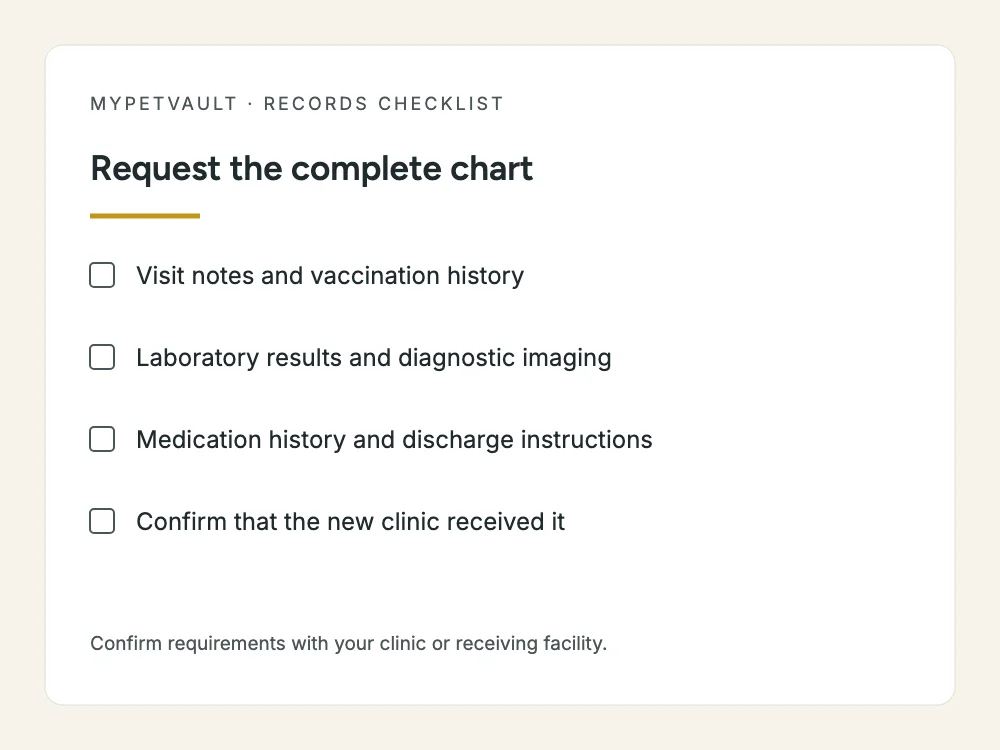
If you call instead, the same guide has a phone script. Follow the call with an email so there is a written request. Then use the steps below to confirm the new clinic received the records and filed them under the right pet.
What "complete" actually means
Clinics sometimes send a one-page vaccine summary when an owner asks for "records." That summary is fine for a groomer; it is not a medical history. A complete transfer matters because the details change care:
- Vaccine dates and lot numbers establish what's due, what's current, and what can be proven at boarding.
- Lab results over time are a baseline. A single blood panel is a snapshot; three years of them are a trend your new vet will genuinely use.
- Imaging reports may help your new vet decide whether repeat imaging is necessary.
- Medication history shows what worked, what didn't, and what caused a reaction. Reconstructing that from memory is how doses get duplicated or allergies get rediscovered the hard way.
- Visit notes carry the context summaries drop: the heart murmur that's "being monitored," the weight trend, the behavior note from a nervous patient.
If the transfer that arrives looks thin, you're allowed to ask again, specifically, for the missing categories. Our full guide to requesting records from your vet covers your rights and the polite-but-firm follow-up.
Timelines and fees: what's normal
- Timing: a few business days is normal; some clinics batch records requests weekly. Urgent transfers (a sick pet being referred) move much faster, say it's urgent and why.
- Fees: access to copies, summaries, and copying fees depends on the jurisdiction. The details vary by state, so if a fee seems steep, ask what it covers before disputing it.
- Format: PDF by email is the modern default. If a clinic offers printed pages only, take them (paper beats nothing) and photograph or scan them the same day.
Confirm the transfer actually arrived
This is an easy step to overlook, and it's the one that fails silently. Clinic inboxes are busy; faxes go astray; a file gets attached to the wrong pet's chart.
A few days before your first appointment:
- Call the new clinic and ask: "Did [Pet's name]'s records from [old clinic] arrive, and are they in the chart?"
- If not, call the old clinic, confirm the email address or fax number they sent to, and ask them to resend while you're on the phone.
- Skim your own copy. If the vaccine dates or medications look wrong or incomplete, flag it now, not mid-exam.
Bring your copy (phone is fine) to the first visit regardless. If anything's missing, you're the backup.
Red flags worth acting on
- "We don't release records." Records-access rules vary by jurisdiction. Ask for the policy in writing, and if you're refused outright, your state veterinary board can explain the rule where you live. (This article isn't legal advice, it's a pointer to the people who can give it.)
- Months of delay. Days are normal; weeks of silence after a clear request are not. Follow up in writing, then escalate politely.
- A summary when you asked for the chart. Not necessarily bad faith, often a default setting. Ask specifically for the missing categories listed above.
- Records sent with another pet's pages mixed in. It happens. If you spot someone else's information, tell the clinic, they'd want to know, and it's a privacy issue on their end too.
Most clinics, it should be said, handle this gracefully every day. Records transfers are a familiar administrative task; the red flags above are the exception, not the culture.
Keep the master copy from now on
The real lesson of a vet switch is that your pet's history lives scattered across whoever happened to provide care. Owners who keep their own complete copy never have to reconstruct it again. That’s why the request above asks for a copy to you as well as the new clinic. Save that owner copy somewhere you can find it; don’t leave it buried in your inbox.
This is also exactly where a pet record app like MyPetVault helps. Its Email-a-Clinic feature drafts the request for you to send from your own email app. Your clinic can upload files through a secure link without an app or account. You review the clinic's uploaded files before adding them to your pet's records. Your first pet is free. Get the app and make your next transfer the last one you chase.
Written for pet owners in the US & Canada. Rules and fees vary by location, so confirm the details with your clinic.
Common questions
Can my new vet request the records instead of me?
Yes, most new clinics will send a request on your behalf, often with a signed release from you. That's convenient, but you stay out of the loop. Doing it yourself (or as well) means you can confirm what's included and keep your own copy.
How long does a vet records transfer take?
Typically a few business days. Clinics may need longer if records are archived or the practice is busy. Build in a week's buffer before your first appointment at the new clinic, and faster timelines are reasonable to request if your pet is sick or being referred.
Can a vet charge for copies of my pet's records?
In many states, yes, a reasonable copying fee is commonly allowed, though the rules on fees, format, and timelines vary by state. Many clinics send PDFs free as a courtesy. If a fee is quoted, ask what it covers.
What if my old vet refuses to send records?
Ask for the refusal in writing and what their policy is. Local rules determine access to copies of veterinary records or a summary. Your state veterinary board can tell you the specific rule and help if a clinic won't comply.
Should I ask for records even if I'm happy with my vet?
Yes, quietly, once. Having your own complete copy protects you against clinic closures, after-hours emergencies at a different hospital, moves, and travel. It costs one email now and saves a scramble later.
Sources & further reading
Keep reading
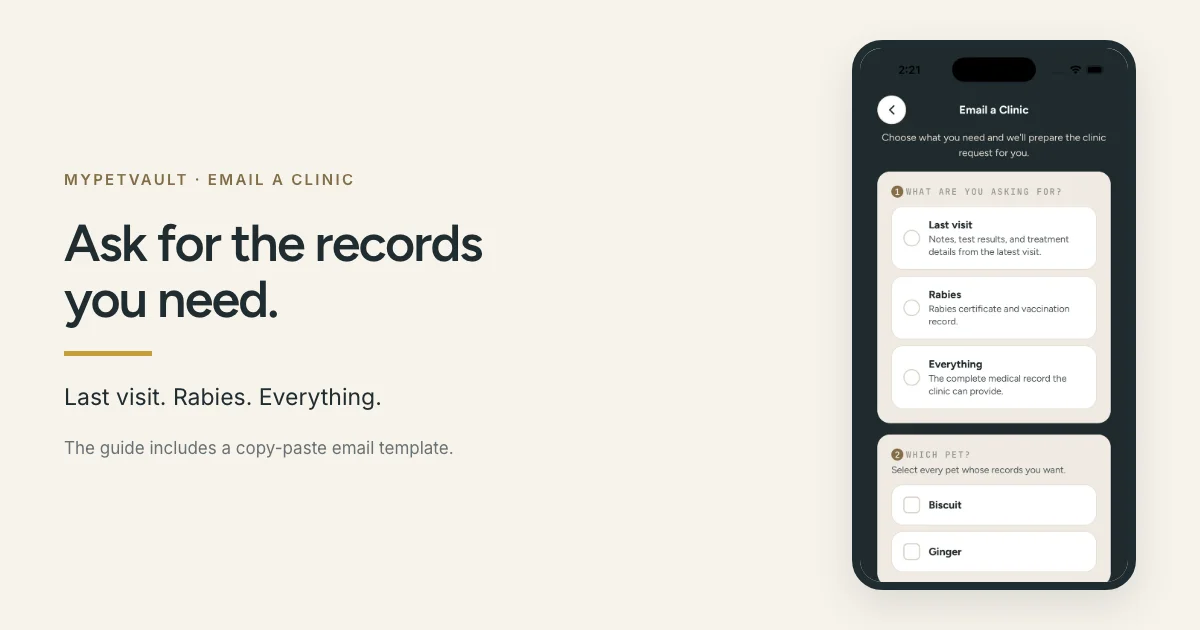 How to Request Your Pet's Records From a Vet8 min read
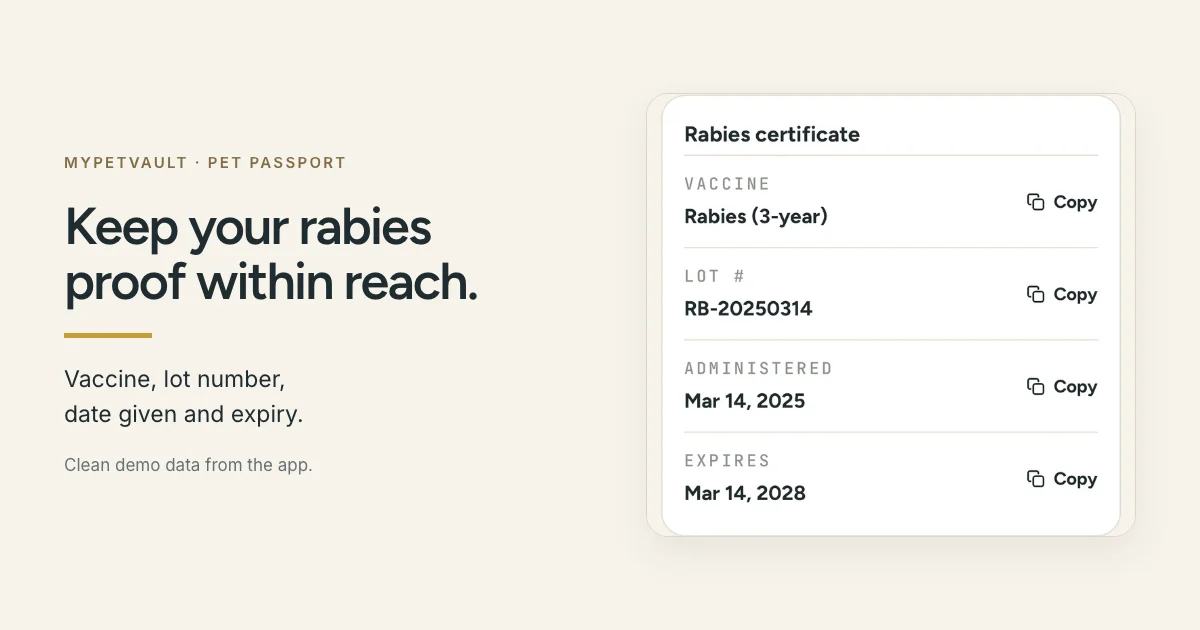 Lost Your Dog's Rabies Certificate? How to Get a Replacement (and Never Lose It Again)8 min read