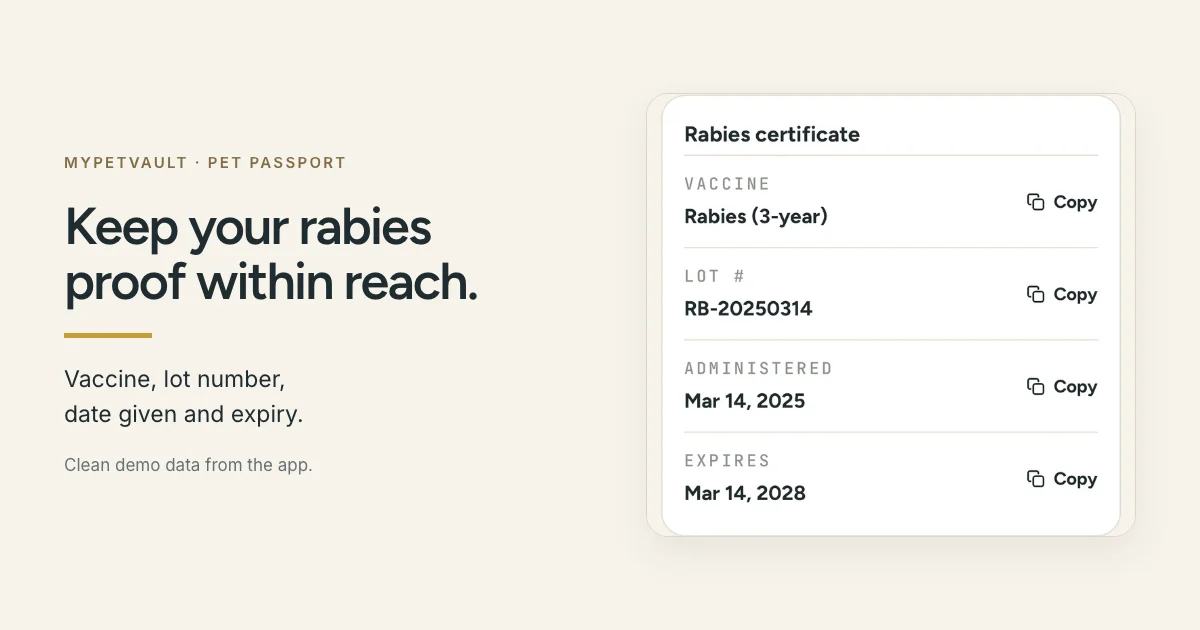
Boarding is booked, the groomer is asking, or the county wants proof, and the one piece of paper you need is nowhere. Deep breath. This is one of the most fixable paperwork problems in pet ownership.
Everything below expands on that, step by step, including the dead ends so you don't waste time on them.
Step 1: Call the clinic that gave the shot
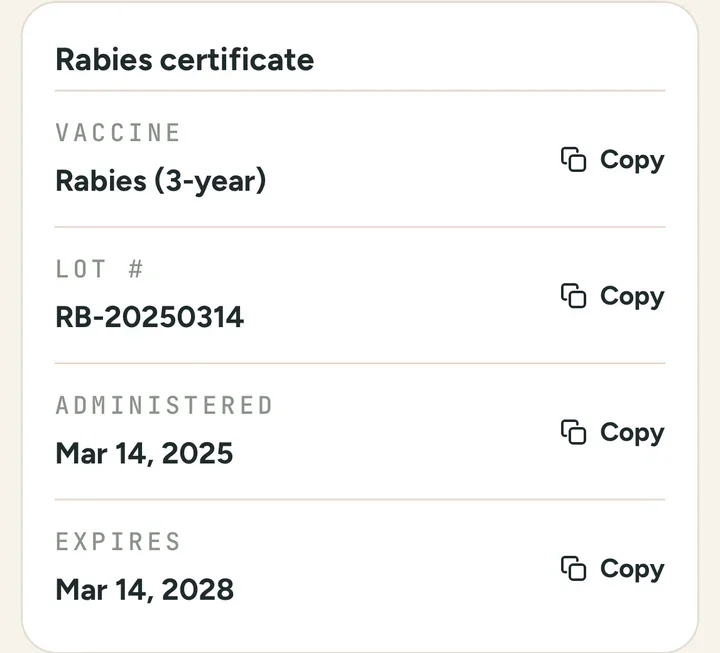
This solves the problem the large majority of the time. When a rabies vaccine is administered, the clinic records the date, the vaccine's lot and serial numbers, the expiration date, and the veterinarian who gave it. The paper certificate you lost is a printout of that record, and records are kept long after the paper disappears.
When you call, ask for:
- A reprinted or emailed copy of the rabies certificate (PDF is ideal because it's easy to store and forward).
- Confirmation of the vaccination date and expiration date, so you know how much valid time is left.
- The lot number to be included; boarding facilities occasionally ask for it.
A few expectations to set. Ask your clinic about obtaining copies or a summary; access requirements, fees, and deadlines vary by jurisdiction. A clinic may charge a reasonable copying fee and may need a few days rather than a few minutes, especially if records are archived. If you're mid-deadline, say so politely. Front desks triage this request constantly, and "boarding is Friday" tends to move things along.
If the certificate was issued somewhere else (a low-cost vaccine clinic, a shelter, a previous vet), that's the office to call. Your current vet may have a copy in your transferred chart, which makes them worth a call too. (If you're not sure your new vet ever received the old records, our guide to transferring vet records to a new vet walks through fixing that.)
Certificate vs. record: what's the actual document?
One clarification that saves confusion: the signed rabies certificate is the official document. It lists your name, your dog's description, the vaccine details, the dates, and the administering veterinarian. A printout of the vaccination history from the clinic's system usually carries the same information and is accepted in most everyday situations, but for licensing, travel, or a bite investigation, officials may want the certificate itself. When you request your replacement, ask for the certificate specifically, not just a vaccine summary. If the clinic can only send a summary first, take it (it's far better than nothing) and follow up for the certificate.
Step 2: If the clinic has closed
Clinics close, merge, and change ownership, and this is where owners understandably panic. There's usually a trail:
- Look for the successor practice. When a clinic closes, its records commonly transfer to a nearby practice or a corporate group that acquired it. The old clinic's phone number, website, or storefront signage often points to whoever holds the records now. A quick search of the clinic's name usually surfaces the announcement.
- Ask your current vet for help. If your dog has seen another vet since, that practice may already hold copies from a previous records transfer.
- Contact your state or local health department or animal control. Rabies is a regulated disease because it is a public-safety issue. State veterinary boards typically require records to be retained for a set number of years after a practice closes and can tell you what the rule is in your state and who the custodian is. Rules vary, so treat this as guidance, not a guarantee.
- Check county licensing records. If your dog was licensed, some counties keep the rabies expiration date on file from the license application. It won't produce the certificate itself, but it can confirm dates while you track the document down.
Be aware there is a real deadline built into this: retention periods are finite. The longer ago the vaccination, the more important it is to move quickly, and the more likely the practical answer becomes Step 3 below.
Two dead ends: the tag and the microchip
Well-meaning advice online often sends owners to one of these. Neither works, and here's why:
- The rabies tag is not proof. The little tag on the collar shows the clinic's name and a tag number, but not the vaccination or expiration dates. Boarding facilities, groomers, and licensing offices generally won't accept it as documentation; at most, it's a clue pointing back to the issuing clinic.
- A microchip registry entry is not a replacement certificate. Registries store your contact information so a lost dog can get home. Even if a registry offers optional health information or document storage, ask the administering clinic for the certificate. Use our microchip registry guide to check and update your contact details; that solves a different problem.
What boarding, groomers, and licensing accept in the meantime
If you have a deadline before the replacement arrives, you still have options:
- Ask the facility what they'll accept. Many boarding and daycare facilities will accept a vaccine history printout or an emailed record directly from your vet's office while the certificate is sorted. Some will call the clinic to verify.
- Have the clinic send it directly. A record sent clinic-to-facility often carries more weight than one you forward, and it's the fastest route when the clinic has already located your file.
- Mind the dates, not just the document. Even a perfect certificate won't help if the vaccine itself has lapsed, and some facilities require certain vaccines to have been given a minimum number of days before a stay. Confirm both the document and the dates are in order before the drop-off day, not in the parking lot.
An older certificate may still be current; check its validity dates. Your recollection alone may not meet the recipient's documentation requirements. Ask the facility what documentation and dates it needs.
Step 3: When vaccinating again is the practical answer
Sometimes the record genuinely can't be recovered: the clinic closed years ago, retention has expired, or the vaccination happened somewhere unreachable. In that case, ask your veterinarian whether revaccination is appropriate and what documentation or waiting period will apply.
A few things to know:
- A new certificate documents the dose, but vaccination status and waiting periods still depend on the animal's history and local requirements.
- Your veterinarian will decide the appropriate schedule based on your dog's history and your state's rules, which vary. If documentation of the previous shot can't be produced, the new vaccination may be treated as an initial one with a shorter validity period than a booster would have had, another reason to try Steps 1 and 2 first.
- This is a conversation to have with your vet, not a decision to make from an article. Bring whatever fragments you have (an old invoice, a tag, a license renewal); partial proof sometimes helps the vet reconstruct the history.
Never lose it again: a 10-minute system
Once the replacement is in your hand, spend ten minutes making this the last time:
- Save the PDF in two places (phone files + cloud storage, or email it to yourself)
- Photograph the paper certificate as a backup
- Note the expiration date in your calendar with a reminder 30 days before
- Keep the paper copy with your own important documents, not loose in a drawer
- Repeat for every pet; keep each pet's certificates separately
Once the replacement arrives, use our guide to keeping rabies records ready to save a readable current copy, separate the older versions, and check it before the next booking. This is the exact problem I built MyPetVault to remove. You upload your dog's rabies certificate once to a pet record app like MyPetVault, and it becomes a Pet Passport that's ready to share whenever boarding, a groomer, or a new vet asks. No drawer, no phone call, no panic. Your first pet is free. Get the app and make the next lost-certificate scare a non-event.
Boarding soon? Check the dog boarding vaccine requirements before you book.
Boarding a cat? The cat boarding requirements are a different list.
Written for pet owners in the US & Canada. Rules and fees vary by location, so confirm the details with your clinic.
Common questions
Can a vet charge me for a replacement rabies certificate?
In many states, clinics may charge a reasonable fee for copying records, though plenty reprint a certificate for free as a courtesy. The rules on fees and timelines vary by state. Ask when you call so there are no surprises.
Is a rabies tag enough proof for boarding?
Generally no. The tag shows the issuing clinic and a number, but not the vaccination or expiration dates that facilities are required to check. Most boarding and daycare facilities need the certificate or a vaccine history showing dates.
Does my dog's microchip registry have the rabies record?
A registry entry is not reliable vaccination proof. Registries primarily hold your contact information for reunification. Ask the administering clinic for the certificate, even if a registry offers optional health information or document storage.
What if the vet who gave the shot has retired or closed?
Records usually transfer to a successor practice. If you can't find one, your state veterinary board or local health department can explain your state's retention rules and may know who holds the records. If nothing can be recovered, your current vet may recommend revaccinating and issuing a fresh certificate.
How long does getting a replacement take?
If the clinic is open and your file is current, often the same day, sometimes within the hour by email. Archived records, closed practices, or multi-step trails can take days, which is why it's worth starting before a boarding deadline rather than during one.
Tommy Cao, founder of MyPetVault
Sources & further reading
Doing this in the app? Saving records help guide
Keep reading
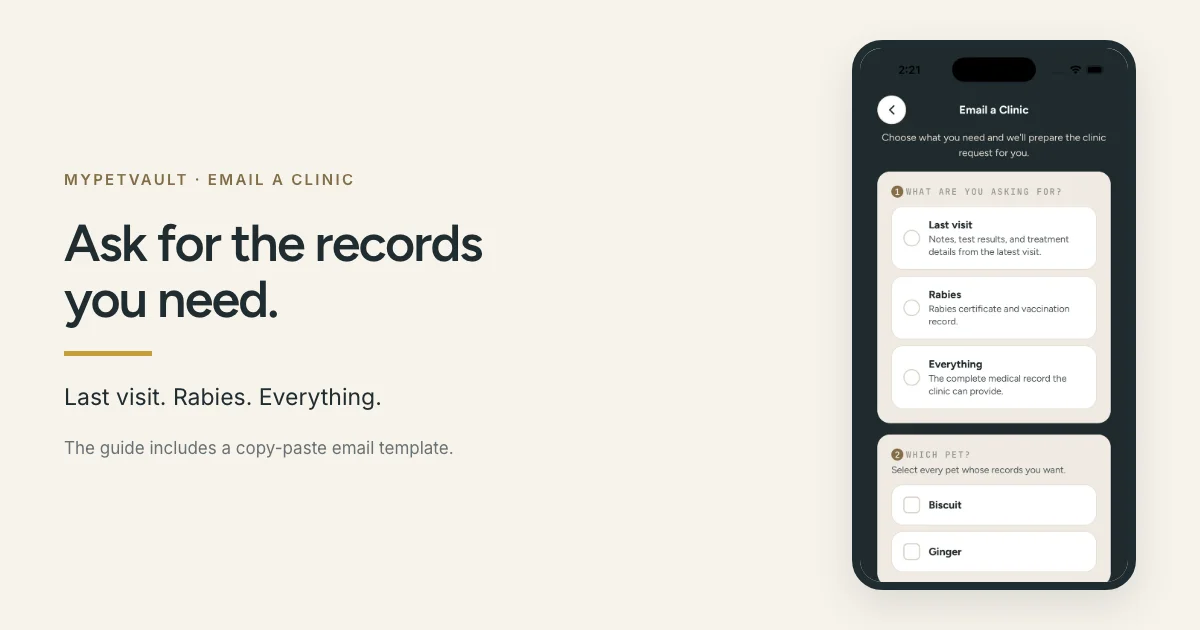 How to Request Your Pet's Records From a Vet8 min read
 Switching Vets: The Complete Checklist for Moving Your Pet's Care8 min read