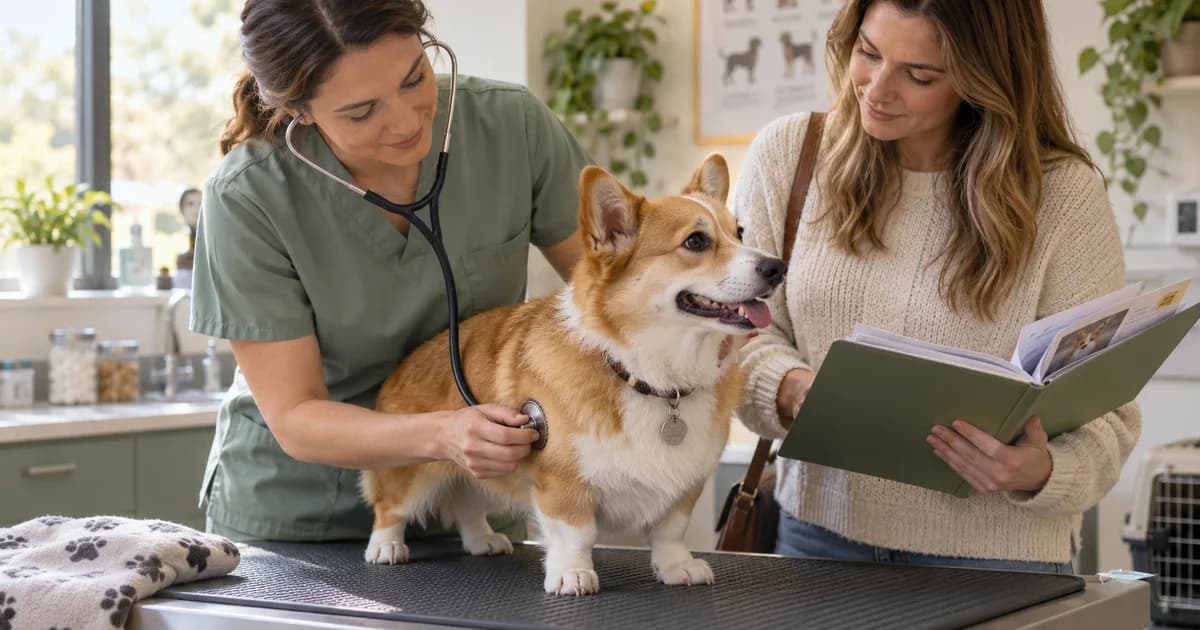
Moving house, a bad experience, a recommendation you trust, whatever the reason, switching vets is common and nothing to feel guilty about. What matters is doing it without gaps in your pet's care.
This page is the full checklist for moving your pet's care to a new vet. If you only need the send-and-confirm mechanics for the records themselves, start with how to transfer vet records to a new vet.
For current background, consult AVMA: veterinarian-client-patient relationship. Facility policies and local requirements can differ; confirm the rules that apply to your pet.
Before you leave: timing and the handover
- Don't switch mid-treatment without a plan. If your pet is mid-treatment (a course of medication, post-surgery follow-ups, a dental plan, an ongoing diagnosis being worked up) either finish the episode of care first or ask the current clinic for a clear written handover summary to give the new vet. Switching mid-stream without records is how tests get repeated and treatment plans get lost.
- Exception: safety and trust come first. If you've genuinely lost confidence in the care, move. Ask for the records immediately (see the transfer step below) and tell the new clinic the situation, they handle mid-treatment arrivals more often than you'd think.
- Book the new vet before you close the old door. Have the first appointment scheduled (and records requested) before your old clinic relationship goes quiet. A gap with no vet of record is a bad place to be during an emergency.
- Ask the new clinic what they want. A quick call, "We're transferring in; what do you need from our old vet?", takes two minutes and tells you exactly what to request. Most will ask for the complete chart, and many will send the request themselves if you'd prefer.
Step 1: Transfer the complete records
Start at least a week before the first appointment, and ask the clinics what turnaround to expect. Follow the vet-record transfer guide to request the full chart, send it to the new clinic, and confirm it arrived. It links to the records-request email template. Ask for a copy to yourself too, and bring it to the first visit. If your pet is in treatment, have both clinics agree on the handover before changing care.
Step 2: Protect medication continuity
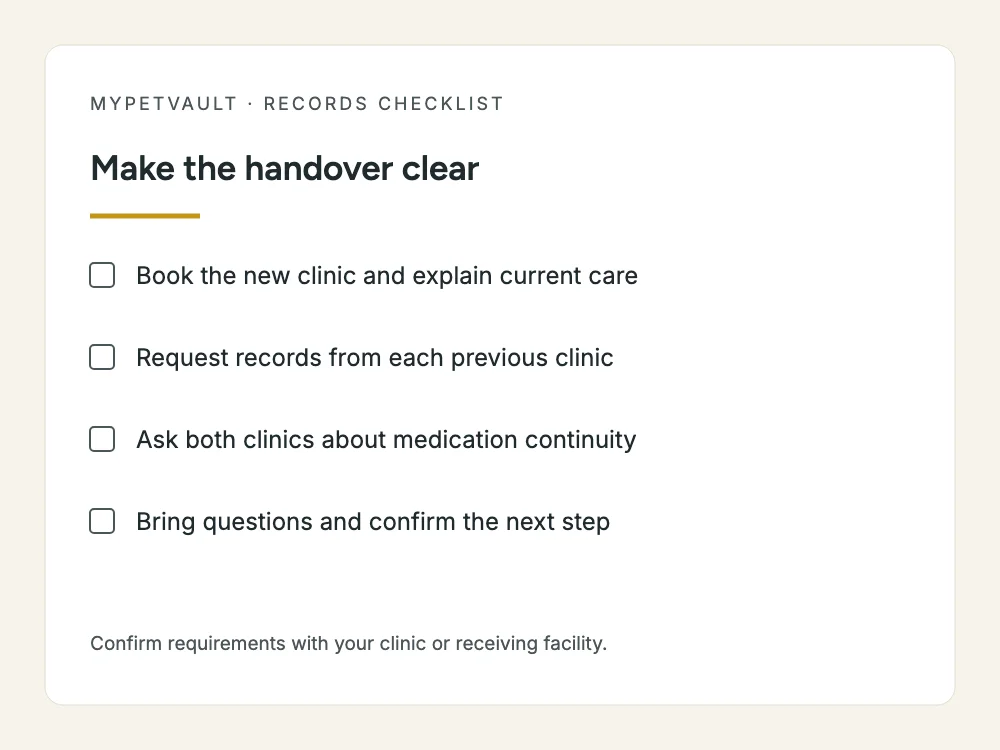
- List every current medication, name, dose, frequency, and how much you have left. Bring this list to the first appointment, or better, send it ahead with the records.
- Refills need a relationship. In most places, a vet must have an established veterinarian-client-patient relationship (usually including a recent exam) before they can prescribe or refill. That means the new clinic may not be able to refill a prescription until they've examined your pet. Don't let a medication run down to the last pill before the switch; ask the old clinic for a refill to bridge the gap, or schedule the new-patient exam early enough.
- Controlled or special medications can have extra rules. Flag them to both clinics early rather than discovering a problem on dose day.
- Ask about equivalents. If the new clinic stocks a different brand or formulation, confirm the dose conversion with them, don't improvise it at home.
Step 3: Check the preventive-care calendar
Switching between record systems is exactly when due dates fall through cracks, the old clinic's reminders stop, and the new clinic's haven't started.
- Vaccines: confirm each due date, rabies, core vaccines, and lifestyle ones like Bordetella or canine influenza if your pet boards or socializes. If a due date lands in the transition window, decide explicitly which clinic gives it.
- Flea, tick, and heartworm prevention: note the product, dose schedule, and next due date. Prevention lapses are quiet and consequential.
- Annuals and screening: if your pet is due for an annual exam, senior bloodwork, or a dental check in the next few months, put it on the new clinic's radar at visit one.
Step 4: Update the paper trail outside the clinics
- Pet insurance. If your pet is insured (for example, with Trupanion), check whether your provider wants to know about the change of clinic and how they receive records for claims. Insurers often pull records directly from clinics, make sure they'll be asking the right one, and keep submitting claims the same way unless told otherwise.
- Microchip registry. Update the registry with your current phone and address, and add the new clinic's details if the registry has a field for it. A microchip registration does not establish vaccination status, but in an emergency it's how a found pet (and the clinic treating them) reaches you.
- County license. If your area licenses dogs, confirm the license and rabies details on file still point to valid documentation, especially if the rabies vaccination is due soon.
- Your household. Update the sitter, dog walker, family group chat, and whoever else might need the vet's number: new clinic name, address, phone, and after-hours emergency route. The person holding the leash in an emergency should never be working from an outdated contact card.
- Boarding and daycare. If your pet boards, give the facility the new clinic's details and confirm they still have current vaccine records on file.
Step 5: The first visit at the new clinic
- Bring your own copy of the records (phone is fine) even if the transfer was confirmed. Belt and suspenders.
- Bring the medication list and the actual bottles if anything is unclear.
- Be honest about why you switched. "We moved," "scheduling never worked," "we wanted a second approach to his arthritis", the new vet isn't judging; the context genuinely helps them understand the history in the chart.
- Ask how they handle records and reminders: Do they email vaccine certificates? Send due-date reminders? Have a portal? Knowing the system now prevents the next records scramble.
- Ask what their after-hours and emergency arrangement is and save the number in your phone before you leave the parking lot.
Step 6: Telling the old clinic (scripts included)
Owners dread this more than clinics do. Veterinary teams see clients come and go for every reason under the sun, and a short, kind message is all it takes. If you requested records by email using our records-request email template, you've honestly already done this step, the request itself is the notice.
If you'd rather say it directly, pick your script:
Moving away: "We've moved out of the area, so we're transferring [Pet's name]'s care closer to home. Thank you for everything, please send her records to [new clinic] and a copy to me."
Practical reasons: "This isn't about the care, the drive and scheduling stopped working for us, so we're moving to a clinic nearer home. I've sent a records request by email; thanks for looking after him."
It just wasn't the right fit: "We've decided to continue [Pet's name]'s care elsewhere. I appreciate the work your team has done. Please transfer the complete records to [new clinic], and a copy to me as well."
Notice what none of these do: apologize excessively, litigate grievances, or burn the bridge. You may want those records again someday, or run into the same team at an emergency hospital at 2 a.m. Gracious and clear wins.
After the switch: close the loop
- Confirm the new clinic has everything, ask directly at the first visit: "Is anything missing from his chart?"
- File your own copy somewhere permanent, not in an email thread you'll never find again.
- Update the emergency contact card (fridge, sitter notes, your phone) with the new clinic.
For the broader records checklist, see our guide to requesting pet records from your vet.
A tidy way to handle that last part: I keep my pets' records (vaccines, medications, certificates) in MyPetVault, a pet record app, where Smart Scan organizes documents into records and the whole history can be shared by email in a moment, whether the recipient is a new vet, a sitter, or an emergency clinic at 2 a.m. Your first pet is free, get the app before the next move, and the paperwork moves with you.
Written for pet owners in the US & Canada. Rules and fees vary by location, so confirm the details with your clinic.
Common questions
Is it okay to switch vets, or will my old clinic be offended?
It's completely normal and clinics expect it, clients move, schedules change, needs change. A brief, kind notice and a records request are all the etiquette required. You're always entitled to choose who treats your pet.
How long before the first appointment should I request records?
At least a week. Access to copies of veterinary records depends on local rules, but clinics may take several days and may charge a reasonable copying fee. Starting early also leaves time to chase anything that doesn't arrive.
Can the new vet just request everything for me?
Yes, most will, often with a signed release. It can still be worth requesting your own copy in parallel, so you hold the complete history yourself and can verify the transfer arrived.
Will the new vet refill my pet's prescriptions right away?
Possibly not until they've examined your pet, prescribing generally requires an established veterinarian-client-patient relationship. Bridge the gap: get a refill from your current clinic before switching, or book the new-patient exam before medication runs low.
Should I tell my pet insurance company I'm switching vets?
Check your provider's process. Insurers typically request records from the treating clinic for claims, so it helps to confirm they'll contact the right clinic, and keep your claim routine unchanged unless they instruct otherwise.
Sources & further reading
Keep reading
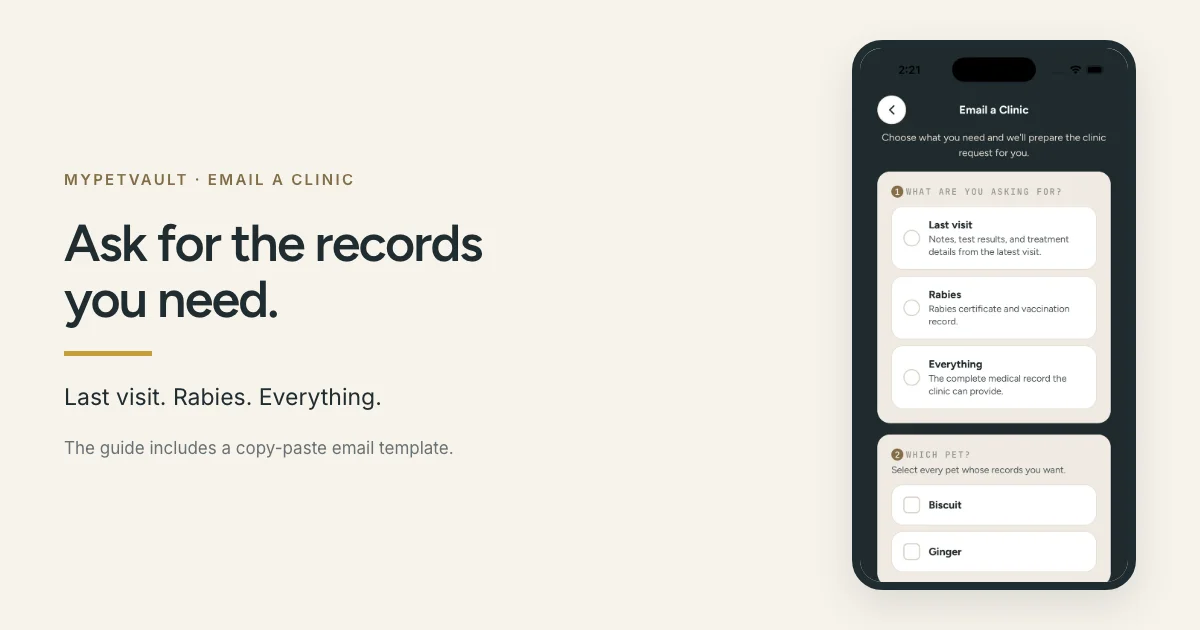 How to Request Your Pet's Records From a Vet8 min read
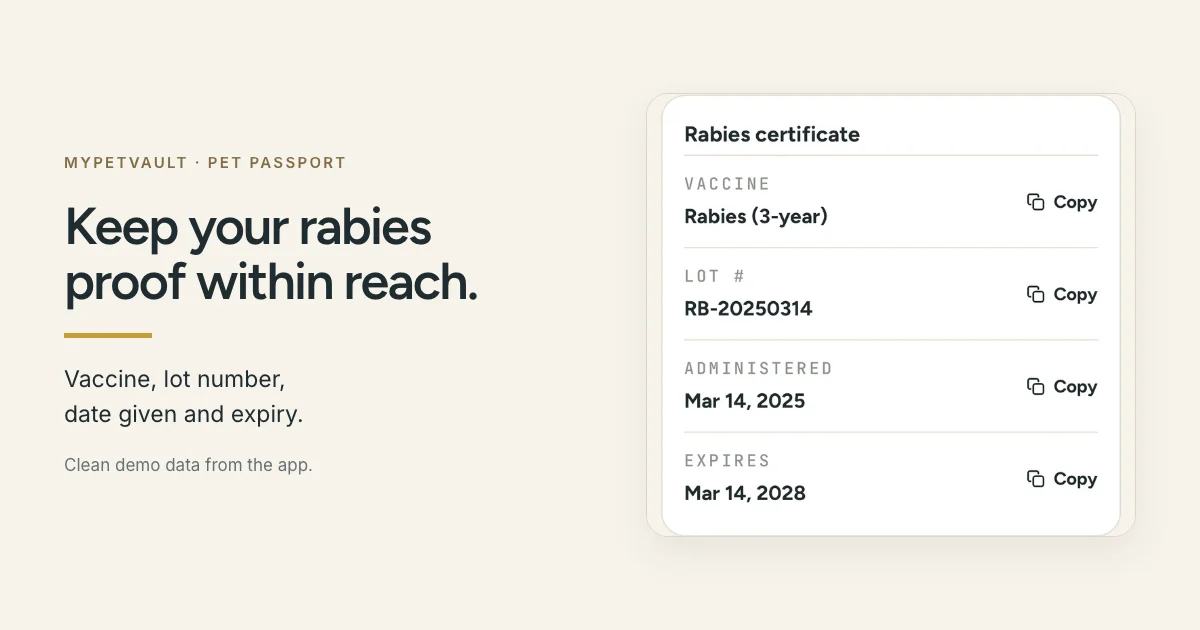 Lost Your Dog's Rabies Certificate? How to Get a Replacement (and Never Lose It Again)8 min read