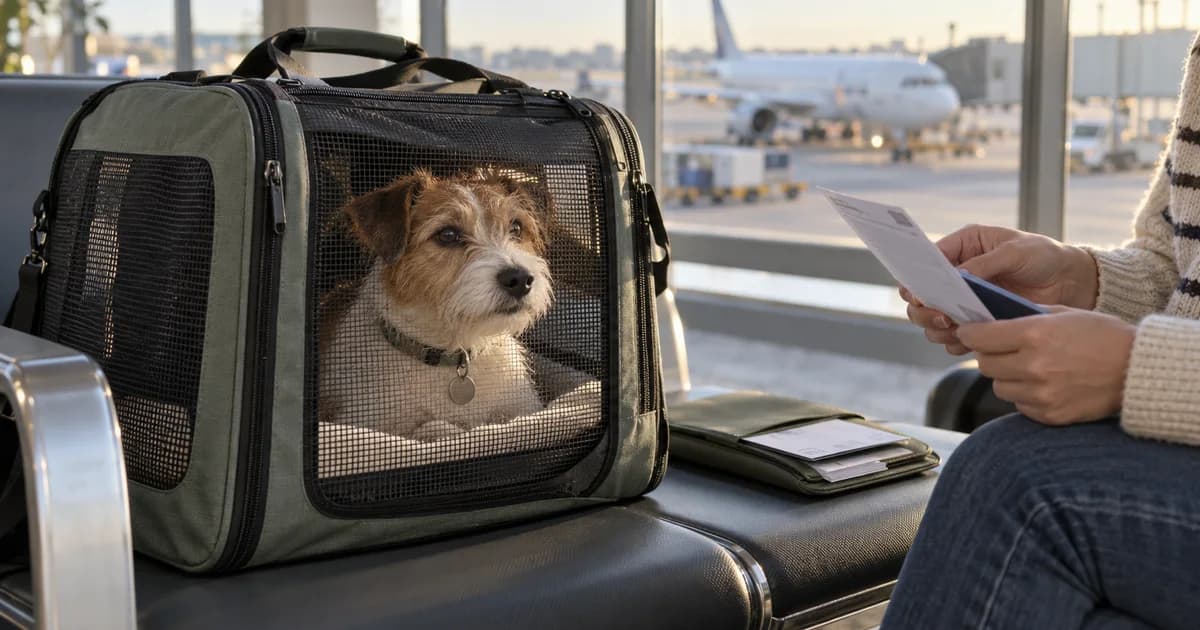
For current background, consult USDA APHIS: interstate pet travel. Facility policies and local requirements can differ; confirm the rules that apply to your pet.
What a health certificate actually is
A health certificate, often called a certificate of veterinary inspection, records an examination and the information required by the receiving authority. Its exact form, statements, vaccination details, and signer requirements depend on the trip. International certificates may require a USDA-accredited veterinarian and USDA endorsement; do not assume those requirements apply identically to every domestic journey.
Two things catch people out. First, your regular vet may or may not be accredited to issue one; if they aren't, you'll need a vet who is. Second, the certificate is a snapshot with an expiry built in, it attests to your pet's health on the day of the exam, which is exactly why the timing window below exists.
The 10-day window, and why it's a planning problem
A certificate issued within 10 days of travel is a common airline requirement when a health certificate is required. For example, Alaska Air Cargo’s Pet Connect rules require an exam within that window. Confirm your airline’s exact rule before scheduling: cabin and cargo policies differ, some domestic cabin trips do not require a certificate, and destination rules may add other deadlines. Check the return leg too.
The window creates two failure modes:
- Too early. You get the certificate three weeks out "to be safe," and it's expired by your flight. The paper is worthless at check-in.
- Too late. You book the vet visit two days before departure, the clinic has no accredited vet available that day, and there's no slack to fix anything the exam turns up.
For a round trip, ask the airline and your vet whether one certificate covers the return leg or whether the return needs its own timing check, especially on longer trips.
Rabies proof: the record that matters most
If one document gets examined, it's the rabies vaccination certificate, the signed certificate from the administering vet showing the vaccine date, the expiry date, and identifying details for your pet. Ask the destination authority and airline which rabies documentation applies to your route.
Practical notes:
- The certificate should be current through your travel dates, not just current today.
- Puppies and kittens too young to have been vaccinated are a special case, rules for them vary widely by state and airline, so ask directly rather than assuming an exemption.
- Bring the actual rabies certificate, not a receipt or an invoice that merely mentions a vaccine was given. The certificate is the document with the dates and the signature.
Getting this organized ahead of time is much easier if you already know what pet records to keep and where each one lives.
In-cabin vs cargo: different paperwork days
In the cabin (small dogs and cats in a carrier under the seat, on airlines that allow it): you'll usually complete the airline's own pet booking and forms, pay a per-leg pet fee, and present the health certificate and rabies proof where required. Space is limited per flight, reserve your pet's spot when you book your own ticket, not after.
In cargo / checked baggage hold: requirements are typically stricter, breed restrictions commonly apply (many airlines refuse snub-nosed breeds in the hold), and temperature embargoes can cancel a pet's travel on hot or cold days even with perfect paperwork. If your pet must fly in the hold, build in a plan B for embargo days.
Either way, your airline's published pet policy (read for your airline, your route, close to your travel date) is the authority. Policies change, and any blog post is a planning aid, not the rulebook.
Destination rules: states, Hawaii, and international
Airlines check their own requirements; destinations impose theirs.
- Other US states: requirements vary; some destinations require a certificate, vaccination documentation, or additional steps. Check the destination state's agriculture or animal-health page when you book.
- Hawaii: the big exception. Hawaii is rabies-free and protects that status with quarantine law. Bringing a dog or cat involves a multi-step program (microchip, rabies vaccinations with defined spacing, a qualifying blood titer test and applicable deadlines, and waiting periods) with quarantine on arrival for animals that don't qualify for direct release. Start with Hawaii's official Animal Quarantine information the moment a trip is contemplated.
- International: a different, longer game entirely, country-specific requirements that may include import permits, USDA endorsement, titer tests, and waiting periods, and rules that differ for returning to the US as well. Lead times of several months are common. Use an accredited vet experienced with international certificates, and start absurdly early.
Timing strategy: book the vet visit backwards
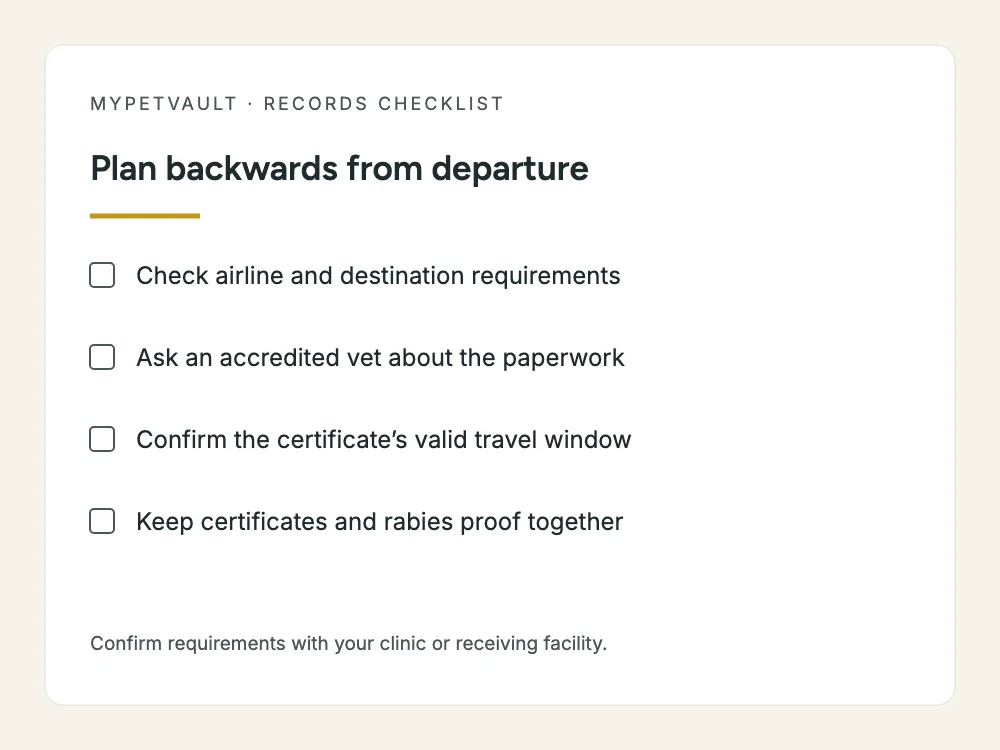
Work from your departure date, not from today:
- At booking (weeks to months out): read your airline's pet policy and your destination's entry rules; confirm whether your own vet is accredited to issue certificates; reserve your pet's cabin spot or cargo booking.
- Two to three weeks out: confirm which exact window your airline and destination require (use their published rule, not a general 10-day assumption), and schedule the certificate exam inside that window with a couple of days of slack before departure.
- Inside the window: the exam happens, the certificate is issued, rabies proof is confirmed current through your return.
- Day before travel: assemble the carry-on records packet (below) and re-check the airline's policy page for changes, embargoes and policy tweaks are announced there.
Your flight-day records checklist
- Health certificate (original; keep a photo/scan backup on your phone)
- Rabies vaccination certificate
- Airline pet booking confirmation and any airline forms
- Your vet's name and phone number
- A one-line summary of medications and feeding, in case of delays
- Your destination address and a local/backup contact
- Recent photo of your pet on your phone
What to carry, and where
Keep the health certificate and rabies proof with you, in the cabin, on your person, not in checked luggage, and not only on your phone. Check-in staff may ask to see originals; a phone photo is your backup, not your primary. If your pet travels in cargo, follow the airline's instructions for which documents travel attached to the crate and which copies stay with you, and keep your own copies regardless.
A note on sedation: most airlines and veterinarians discourage sedating pets for flights, sedation can affect balance, breathing, and temperature regulation at altitude, and some airlines won't accept a sedated animal in cargo. If anxiety is a concern, talk to your vet well ahead of time about carrier familiarization and what they recommend for your pet. Don't improvise medication for a flight.
After you land: records for the trip and the return
Travel generates paperwork; file it while it's fresh. Save the used certificate and any destination documents with your pet's other records, if questions arise later (a return-trip dispute, a new vet asking about travel history), "we flew in June, here's the certificate" beats reconstructing it. Check certificate timing again before a long trip's return leg, and note anything from the trip (appetite changes, a vet visit at your destination) for your regular vet to see at the next visit.
The records habit that makes this easy
The stressful part is often finding the papers while the travel window is ticking. MyPetVault is a pet record app that keeps the source documents with your pet’s records, so you can find the certificate and send a summary when asked. It does not issue a travel health certificate or replace the airline’s required form. Your first pet is free. Download MyPetVault and file the documents before you start packing.
Written for pet owners in the US & Canada. Rules and fees vary by location, so confirm the details with your clinic.
Common questions
How long is a health certificate valid for flying?
Validity depends on the airline, destination, route, and transport method. Some requirements use 10 days, but others differ. Confirm the current issue window and return-trip requirements before scheduling the exam.
Does my pet need a health certificate for every flight?
No universal rule applies to every flight. Some in-cabin trips do not require an airline health certificate, while cargo and destination requirements may differ. Check both the carrier and destination authority for your exact itinerary.
What if my pet's rabies vaccination expires during the trip?
Ask your veterinarian and the destination authority how the documented validity dates apply to your itinerary. If an update is needed, plan it early enough to meet any required interval and obtain the correct certificate.
Can my regular vet issue the certificate?
Ask whether your vet can complete the form required for your destination and transport method. International certificates may need a USDA-accredited veterinarian and endorsement; domestic signer rules vary. Confirm before booking.
Is flying to Hawaii or another country just a stricter version of the same thing?
No, it's a different process. Hawaii's rabies-free quarantine program involves microchipping, spaced rabies vaccinations, a blood titer test, and waiting periods measured in months, with quarantine for animals that don't qualify for direct release. International moves add import permits and USDA endorsement. Start months ahead and work from the destination's official requirements.
Sources & further reading
Keep reading
 How to share pet records with a vet, groomer, boarding facility, or caregiver8 min read
 Pet Emergency Information Sheet: What to Prepare Before You Need It7 min read