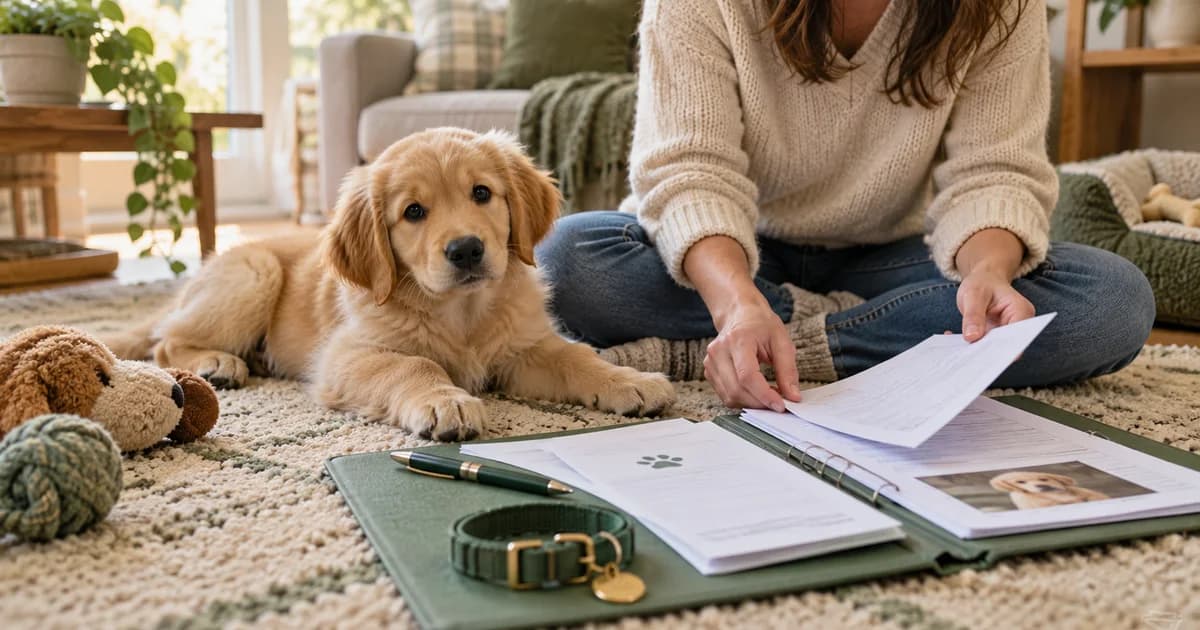
Bringing home a puppy means toys, treats, a crate, and a surprising amount of paper. Vaccination records, deworming dates, a microchip number, a vet exam note: these documents will follow your dog to every vet visit, boarding stay, and groomer for years. Records arrive as a breeder's folder, a shelter printout, a few text messages, or almost nothing at all.
For current background, consult AAHA canine vaccination recommendations. Facility policies and local requirements can differ; confirm the rules that apply to your pet.
Before Pickup Day: What to Ask the Breeder, Seller, or Shelter For
Ask whoever raised your puppy for these before or on pickup day, while the people with the answers are still in front of you:
- Vaccination record. The most important document. It should list each vaccine, the date given, and ideally the manufacturer's lot sticker from the vial. Puppies typically start their DHPP series (distemper, hepatitis, parvovirus, parainfluenza) at around 6–8 weeks, so many arrive with a dose or two done. The dates matter most, your vet schedules the rest of the series from them.
- Deworming record. Puppies are commonly dewormed several times in their first weeks. Get the product name and the dates.
- Vet exam note. Most litters see a vet before going home. Ask for the clinic's name and a copy of the exam note, including any findings.
- Microchip number. If your puppy is already chipped, get the number in writing (9, 10, or 15 digits) plus the registry it was enrolled with. You'll need both in week two.
- Food and schedule sheet. Brand, amount, and frequency. Ask your vet how to handle food changes, and "what was she eating?" is the first thing your vet will ask.
- Contract and health guarantee. If you bought from a breeder, keep these. Some guarantees are only valid if your own vet sees the puppy within a set number of days, check that deadline today, not the day you need it.
Adopting instead? Shelter and rescue packets cover similar ground: a vaccination summary, spay/neuter status (or a voucher if the puppy is too young), and microchip paperwork. Whatever form it takes, photograph or scan every page the day you receive it, paper gets lost in moves, and a photo backup takes thirty seconds.
Week 1: Start the Folder and Book Your Own Vet
In week one, your only paperwork jobs are to start one home for everything and to book the first appointment with your own veterinarian, within the first few days, sooner if your contract requires it.
Use one folder, binder, or digital album labeled with your puppy's name, with the pickup packet as page one. Add a cover sheet:
- Puppy's name, breed (or best guess), birth date or estimated age, sex, color/markings
- Your name, phone, and address
- Your vet clinic's name, phone, and address, plus the emergency vet's
- Microchip number and registry (confirmed in week two)
That sheet is what you'll hand a sitter, a boarding facility, or an emergency clinic at 2 a.m. For the bigger picture of what belongs in a pet's file long-term, see our guide to what pet records to keep.
The First Vet Visit: Documents That Come Out of It
Your first visit with your own vet creates the foundation of your puppy's medical file. Bring the entire pickup packet, the staff will copy what they need and turn it into a plan. Expect the visit to produce:
- A baseline exam record, including weight. Early weights form the growth curve every future vet will glance at first.
- A vaccine plan. Puppy vaccines are a series, not a single event. As general guidance, DHPP boosters are typically given every 3–4 weeks from about 6–8 weeks of age through at least 16 weeks or as your veterinarian recommends, and rabies is typically given once at about 12–16 weeks, exact timing is set by your vet and by state law. Your vet will confirm which earlier doses "count," which need repeating, and the next appointment dates. Write those due dates down before you leave; "sometime next month" is how doses get missed.
- A fecal test result and any deworming or parasite prevention started at the visit.
- Copies for your folder. Ask the front desk for a printed or emailed visit summary before you go.
One records-side note on socialization: the early socialization window overlaps with the vaccine series, and balancing the two is a conversation for your vet, who knows your puppy's dates and local risk. Your job is to keep the dates accurate, so that conversation (and later decisions about classes or daycare, which ask for vaccine proof) rests on real numbers, not memory.
Week 2: Transfer the Microchip Into Your Name
This is an easy step for new owners to miss. A microchip is not a GPS tracker, and it does not automatically know who you are. The chip carries only a number; that number is looked up in a registry, and the registry holds the contact details. Whoever enrolled the chip usually registered it to themselves, or left it blank.
If your puppy ever gets lost, whoever scans the chip will call the number in the registry. If it belongs to a breeder three states away, or to nobody, the chip has failed at its only job. So, in week two:
- Find the chip number, in your pickup packet, your vet's file, or by asking your vet to scan and read it.
- Identify the registry. The AAHA Universal Pet Microchip Lookup can help identify a participating registry; contact that registry to confirm the registration.
- Transfer the registration to your name, address, and phone through that registry. Some transfers are free; some charge a small fee. Do it anyway.
- Log into the registry or contact its support team to verify your details. The public AAHA lookup identifies registries, not owner contact information. Write the registry on your folder's cover sheet.
Not chipped yet? Ask your vet at the next visit, and complete steps 2–4 the same week it's done.
Weeks 3–4: Keep the Series on Track and File the "Later" Documents
The rest of the first month is rhythm. Each booster visit generates a receipt and an updated vaccination record, file both the same day, and update the next due date on your cover sheet or calendar. Rabies deserves special care: in many places the certificate is a legal document, and boarding facilities, daycares, groomers, and landlords ask for it by name. Keep the actual certificate, not just a receipt.
Two decisions in this window also create paperwork worth filing:
- Pet insurance. If you buy a policy, file the policy number, start date, and what's covered or excluded. Keep itemized invoices from every visit either way; insurers (and sometimes breeders honoring a guarantee) ask for them.
- Spay/neuter certificate. Your veterinarian can recommend an appropriate spay/neuter plan based on your puppy's circumstances. When it happens, the certificate goes in the folder permanently, landlords, licensing offices, and daycares may ask for proof years later.
By day 30, your folder should hold the pickup packet, one visit summary from your own vet, a vaccine record with the next due date circled, the cover sheet, and proof the microchip points to you. That's a complete foundation.
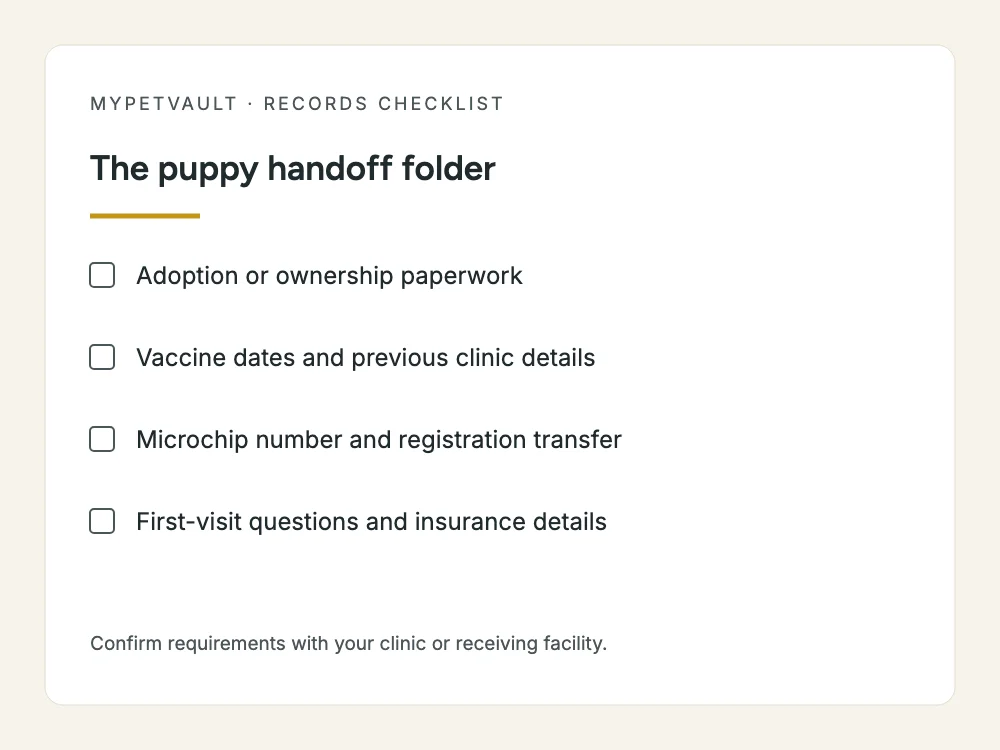
Your First-30-Days Checklist
- Vaccination record with dates and lot stickers
- Deworming record (product + dates)
- Pre-pickup vet exam note and clinic name
- Microchip number and registry name in writing
- Contract / health guarantee (check the vet-visit deadline)
- Start one folder; add a cover sheet with contacts and emergency vet
- Book and attend the first visit with your own vet; bring the packet
- Get the vaccine series plan with exact next due dates
- Transfer the microchip registration into your name, then verify it
- Keep the rabies certificate itself when the rabies shot is given
- File insurance details (or note the decision) and all invoices
- Add the spay/neuter certificate when the time comes
One Place for All of It
Paper folders work, until they're in a drawer at home and you're at the boarding desk. If you'd rather keep the file on your phone, that's the problem MyPetVault, a pet record app, was built for: the Pet Passport holds the rabies certificate (upload it and the Passport is ready to share), Smart Scan reads the documents you collect and organizes them into records, anything missing can be requested from your clinic by email with a secure upload link, and your household sees the same file. You can start free with your first pet and build the folder from day one.
Written for pet owners in the US & Canada. Rules and fees vary by location, so confirm the details with your clinic.
Common questions
What paperwork should a breeder or shelter give me with a puppy?
At minimum: a vaccination record showing each vaccine and its date, a deworming record, a note from the pre-pickup vet exam, the microchip number and registry if chipped, and feeding information.
What if my puppy came with no records at all?
Tell your vet at the first visit. Your vet will assess age, available history, and risk before recommending a vaccination plan. Do not decide which doses to repeat from a checklist. Get the microchip checked or placed, and let your new vet's file start the record. Thin paperwork is common with rescues and rehomed puppies; accuracy from your first visit forward is what matters.
When does my puppy get the rabies vaccine?
Typically once at around 12–16 weeks, but the exact age is set by state law and your veterinarian's judgment, so follow your vet's date. When it's given, keep the signed rabies certificate itself, it's what boarding facilities, groomers, and licensing offices ask for.
How do I put the microchip in my name?
Find the chip number, look up which registry holds it (your vet can scan the chip; a lookup tool identifies the registry), then contact that registry to transfer the registration to your name, address, and phone. Confirm your contact details directly with the registry; the public AAHA lookup does not display owner information.
How should I keep the original documents?
Keep the original packet together and save readable digital copies. Check names and dates when new records arrive, and ask the issuing clinic to correct unclear or conflicting entries.
Sources & further reading
Doing this in the app? Getting started help guide
Keep reading
 Adopted a Cat? The Records Checklist Your Shelter Handoff Should Include8 min read
 Pet Bloodwork Costs: Focused Panels and When to Discuss Yearly Testing9 min read