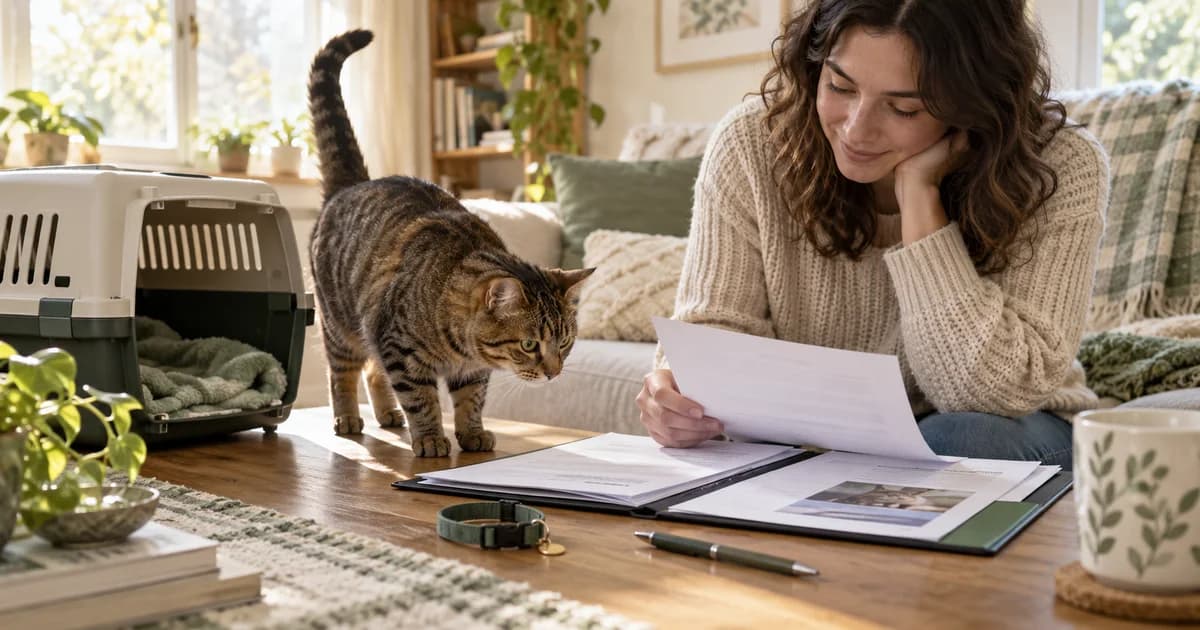
Adoption day moves fast. There's a carrier, a contract, food samples, a folder of papers you promise yourself you'll read later, and a cat who would like to go home. That folder matters more than it looks: it decides what your veterinarian does at the first visit, when the next vaccines are due, and whether a microchip can actually bring your cat back to you.
For current background, consult AAHA feline vaccination recommendations. Facility policies and local requirements can differ; confirm the rules that apply to your pet.
What a Complete Shelter Handoff Packet Looks Like
Shelters and rescues document differently, but a thorough handoff covers the same ground:
- Spay/neuter certificate or surgery note. Proof your cat was altered, with the date and the clinic that performed it. If your cat was not spayed or neutered before adoption (common with young kittens), the packet should say so and include any voucher, appointment, or contract deadline, many contracts require the surgery by a certain age; the certificate you get then is a permanent record.
- Vaccination dates. Look for FVRCP (the combination vaccine covering feline viral rhinotracheitis, calicivirus, and panleukopenia) and rabies, with the date each was given. Kittens receive FVRCP as a series; adults typically arrive current or get a booster at the shelter. Rabies should come with its own signed certificate, not just a line on a summary sheet, it may be needed for local licensing or travel.
- FeLV/FIV test result. Most shelters test for feline leukemia (FeLV) and feline immunodeficiency virus (FIV) before adoption. You want the result and the date tested, in writing, a result from six months ago and one from last week mean different things to your vet, especially in a multi-cat home.
- Deworming and flea treatment dates. Product names and dates given. Your vet needs the last date to time the next treatment.
- Microchip number and registry. A string of 9, 10, or 15 digits, plus the registry holding the registration. Many shelters chip every cat before adoption, but the registration usually starts in the shelter's name, not yours.
- Vet exam notes and known history. The shelter vet's exam findings, any treatment received in care (an upper respiratory infection is extremely common in shelter cats), current medications with instructions, and what's known about prior life, surrender reason, found location, estimated age. Note the food your cat has been eating, too, ask your vet how to handle changes.
Photograph or scan every page when you get home, and keep the packet intact, your vet will want all of it. For the long-term view of what belongs in a cat's file, see our guide to what pet records to keep.
The First 48 Hours: Check the Packet Against the List
Once your cat is home and decompressing, check the folder against the six items above. Note anything missing or unclear:
- Is there a rabies certificate, or only a mention that rabies was "given"?
- Are vaccine entries actual dates, or just checkmarks?
- Is the FeLV/FIV result written down, with a date?
- Is there a microchip number, and does it name the registry?
Bring the list to a quick call or email to the shelter (while you're still within any post-adoption support window) and to your first vet appointment, which you should book within the first week or two, sooner if your cat is on medication or your contract sets a deadline.
If the Handoff Is Thin: How to Fill the Gaps
Plenty of good adoptions come with thin paperwork: a transferred cat, a foster-based rescue, a stray whose history begins the day she was found. Reconstruct what's missing, in this order:
- Call the shelter and ask specifically. Not "do you have records?" but "can you send me the vaccine dates, the FeLV/FIV test date and result, and the name of the clinic that did the spay?" Shelters keep medical logs even when the packet was rushed, and specific requests are easy to fulfill.
- Ask for the shelter's vet or clinic of record. If an outside clinic provided care, it holds the actual medical file. Contact them, explain you've adopted the cat, and request the records, to you or directly to your new vet.
- Let your own vet rebuild the timeline. Bring every available record and identify gaps. Your vet can decide which doses or tests need verification or follow-up; missing paperwork alone is not a reason to choose treatment yourself.
The one gap you can't delegate is the microchip registration.
The First Vet Visit: Turning the Handoff Into a Plan
Book the first visit within the first few weeks, and bring the shelter packet. This visit converts shelter paperwork into a care plan:
- A baseline exam and weight, the reference point for every future visit.
- Confirmation of what's documented. Your vet reviews vaccine dates, test results, and surgery proof, and flags anything to repeat or verify, a FeLV/FIV retest is sometimes recommended after a settling-in period.
- A vaccine schedule with written due dates. Your veterinarian reviews age, documented doses, health, and local rules to decide the next steps. Kitten schedules may continue through 16–20 weeks or longer depending on circumstances. Record the specific dates your vet recommends rather than calculating a schedule from this checklist.
- A parasite plan, timed from the shelter's last deworming and flea treatment dates.
Ask for a printed or emailed visit summary before you leave, and file it with the shelter packet.
The Microchip Transfer: Confirm Your Contact Details
A microchip number is useful only when the registration leads to current contact information. Do not assume an adoption automatically completes the transfer. The chip stores an identification number; the registry holds contact details. Check the registration directly with the registry so a finder or clinic has a workable route to you.
In your first week:
- Find the chip number in your adoption packet, or ask your vet to scan and read it at the first visit.
- Identify the registry, a lookup tool such as the AAHA Universal Pet Microchip Lookup shows which company holds the number.
- Transfer the registration into your name, address, and phone through that registry, adding a backup contact if allowed. Some registries charge a small transfer fee; pay it, this is the highest-value page in your cat's file.
- Verify your details through your registry account or its support team. The public AAHA lookup identifies registries, not owner contact information. Write the number and registry on your cat's folder.
Indoor cats need this just as much, an indoor cat can slip out unexpectedly.
If the number returns no registry, or the transfer is stuck with the previous contact, follow the microchip registry check and transfer steps. Saving the number in your records does not update the registry.
Yes, Indoor Cats Still Need Rabies Records
Adopters of indoor cats often assume rabies paperwork doesn't apply to them. It does, for three practical reasons. First, rabies vaccination laws can apply to indoor cats; check your local requirements, and the certificate is the proof. Second, exposure happens indoors: bats get into houses, and a bat encounter with an unvaccinated cat can trigger quarantine requirements. Third, other people ask for it: boarding facilities, pet sitters, groomers, and landlords request the certificate by name.
File it where you can reach it, note its due date, and keep it current even if your cat never goes outside.
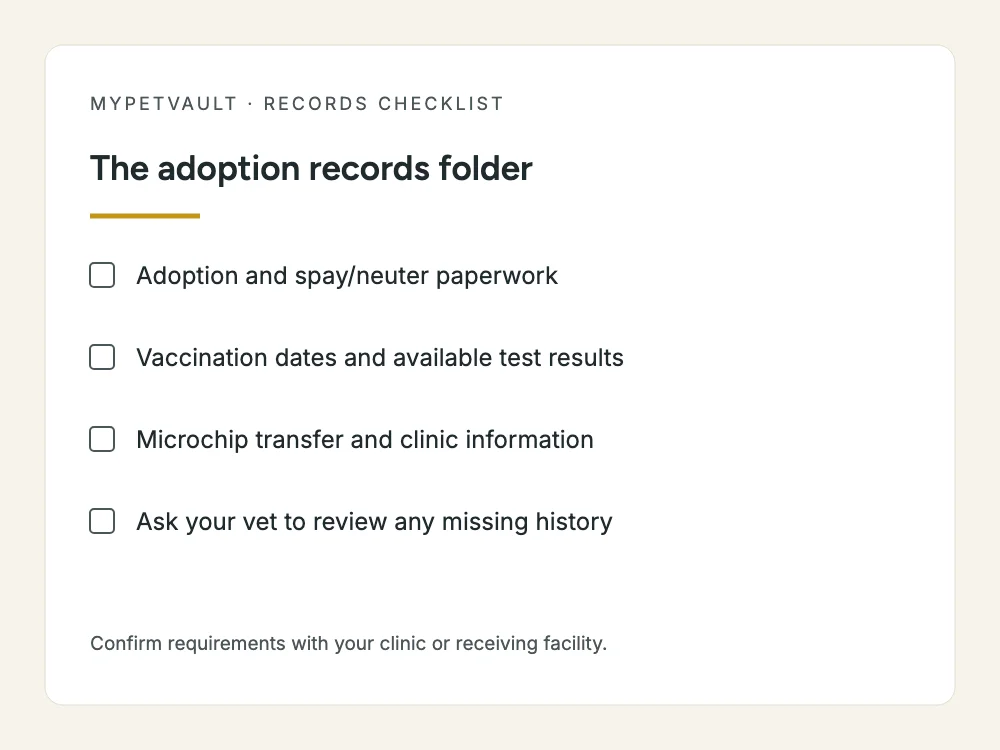
Your Adopted-Cat Records Checklist
- Spay/neuter certificate (or the surgery plan/voucher if not yet done)
- FVRCP vaccine date(s)
- Rabies vaccine date and the signed rabies certificate
- FeLV/FIV test result with the date tested
- Deworming and flea treatment dates and products used
- Microchip number and registry name
- Shelter vet exam notes, treatments, and current medications
- Request anything missing from the shelter or its clinic of record
- Book the first vet visit within the first few weeks; bring the packet
- Transfer the microchip registration into your name, then verify it
One Place for All of It
The shelter folder works until it's in a kitchen drawer and you're standing at a boarding desk or a new vet's office. If you'd rather keep your cat's file on your phone, that's what MyPetVault, a pet record app, is for: the Pet Passport holds the rabies certificate (upload it and the Passport is ready to share), Smart Scan reads the handoff packet's documents and organizes them into records, anything missing can be requested from the shelter's clinic by email with a secure upload link, and your household sees the same file. You can start free with your first pet and build the record from day one.
Common questions
What records should come with an adopted cat?
Ideally: a spay/neuter certificate, FVRCP and rabies vaccination dates with the signed rabies certificate, the FeLV/FIV test result and date, deworming and flea treatment dates, the microchip number and registry, and the shelter vet's exam notes. If pieces are missing, ask the shelter for the specific items.
My adopted cat's vaccine history is unknown. What happens?
Your vet will review your cat's age, health, and any available evidence before setting a documented vaccination plan. Ask which past doses can be verified and what follow-up is appropriate.
Do indoor cats really need a rabies vaccine and certificate?
Check local requirements, rabies laws can apply to cats whether or not they go outside, and the certificate is the proof. It also covers what nobody plans for: a bat in the house, an escape, or a boarder or landlord asking for documentation.
How do I transfer my adopted cat's microchip into my name?
Get the chip number from your adoption packet or have your vet scan it, find which registry holds it using a lookup tool, then update the registration with that registry to your name, address, and phone. Confirm your contact details directly with the registry; the public AAHA lookup does not display owner information. Until then, anyone who finds your cat will be calling the shelter, or whoever registered the chip first.
How should I keep the original documents?
Keep the original packet together and save readable digital copies. Check names and dates when new records arrive, and ask the issuing clinic to correct unclear or conflicting entries.
Sources & further reading
Doing this in the app? Getting started help guide
Keep reading
 New Puppy Paperwork: Every Record to Get, Keep, and Organize in the First 30 Days9 min read
 Pet Bloodwork Costs: Focused Panels and When to Discuss Yearly Testing9 min read